
For Michelle Chu, fashion is more than what we wear. It can become a language for feelings that are difficult to articulate, a way to explore identity, protection, belonging and the distance between how we feel and how we appear.
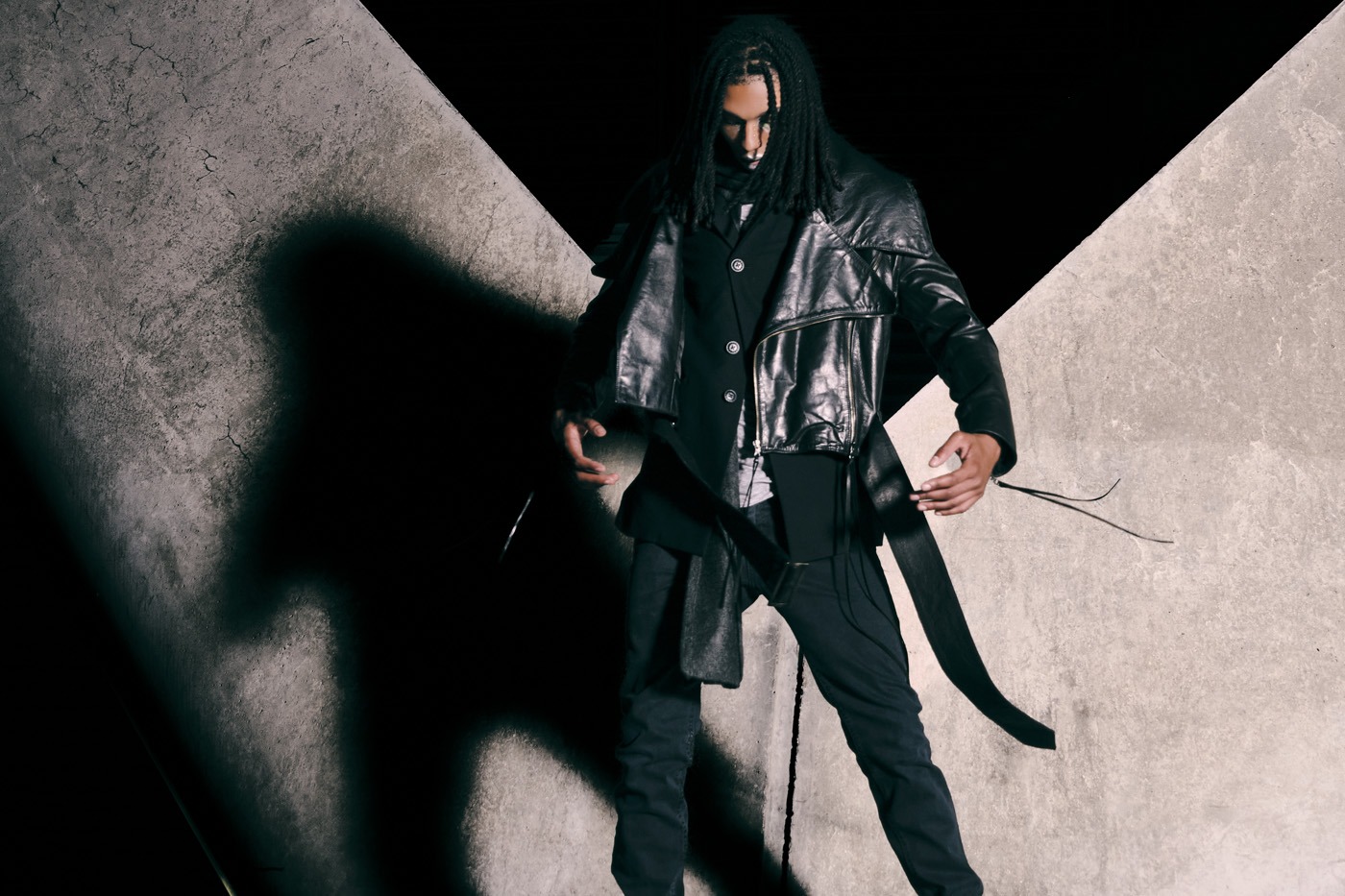
Her editorial Out of Range inhabits that space. Set against open fields and industrial infrastructure at night, the project follows a solitary male figure through a landscape that feels both expansive and confining. Power lines, empty roads and distant structures stretch into the darkness, while oversized clothing surrounds the figure almost like armour.

The result is an exploration of emotional distance: between people, between places, and between different versions of ourselves.
“I wanted to translate that feeling into something visual rather than explain it literally,” Michelle says. That feeling is rooted in the contradiction between wanting to belong and wanting to remain an individual. In a social media-led world, where people are constantly seeing how others present themselves, Michelle became interested in the ways we adapt ourselves to fit spaces, relationships and expectations, and how, sometimes, the more we try to fit in, the further we feel from ourselves.
At the centre of Out of Range is a character who is physically present but psychologically elsewhere. For Michelle, being “caught between places” is not necessarily about being lost. It is about feeling “suspended between two versions of yourself.”


There may be a way out, but the barrier can be internal. You can know what you want to say, what you want to do, or even when you want to leave a situation, while something within you keeps you exactly where you are. That emotional suspension became the foundation of the editorial.
The landscape gives that feeling a physical form.

Shot at night in an open park, the location was deliberately chosen for its emptiness. Michelle wanted the environment to feel quiet, unfamiliar and almost too open. There is a sense of calm in the space, but also something unsettling about having so much room around you and nowhere obvious to go.
“When you remove the distractions of a city, there is suddenly much more room for your thoughts,” she explains.
The openness also creates a contrast with the clothing. While the environment leaves the character completely exposed, the oversized garments appear heavy and protective.
“The clothing became almost like an armour,” Michelle says.
She wanted the silhouette to feel larger than the person inside it, as though fashion had become a physical barrier between the character and his surroundings. But the protection is deliberately complicated. Clothing can create power and confidence, while also allowing an individual to disappear.
“An oversized silhouette can make someone feel powerful, but it can also make the individual disappear.”
That tension between protection and isolation becomes one of the editorial’s central questions: when does protecting yourself begin to separate you from the world around you?

The recurring imagery of power lines, empty roads and industrial structures extends this idea. Power lines were particularly important to Michelle because they represent connection. They carry something from one place to another and form a visible network, yet their beginning and end can remain unknown.
“They are literally about connection,” she says, “but they also create a visual network that you can see without necessarily knowing where it begins or ends.”
The empty roads and infrastructure ground the work in everyday life. This sense of isolation is not taking place in some distant, imaginary world. It exists alongside the spaces where people commute, work and interact every day. The landscape becomes an internal world, while the infrastructure reminds us that the character still exists within society.

Direct flash photography reinforces this tension. Michelle wanted the light to feel immediate and almost intrusive, isolating the character against the surrounding darkness. The resulting portraits feel intimate and confrontational, as if the viewer has suddenly entered a private moment.
The flash also prevents the landscape from becoming overly romantic. Instead, it makes the character feel “very small and very visible at the same time.”
That contradiction reflects Michelle’s wider approach to youth culture. Growing up in Hong Kong exposed her to different languages, influences and ways of thinking, while also making her conscious of what she felt was missing from the creative environment around her. She became interested in making work that was more playful, emotional and experimental while remaining connected to real experiences.

Her interest in youth culture comes from being part of it herself. Rather than simply documenting how young people look, Michelle wants to explore what it feels like to be young now.
Trends may constantly change through social media, but the emotions underneath them remain familiar: wanting to belong, wanting to be understood, feeling insecure about how you are perceived, and trying to understand who you are.
“I do not want my work to simply document what young people look like,” she says. “I want it to express what it can feel like to actually be young now.”
That desire for recognition is also why Out of Range remains deliberately open-ended. Michelle does not explain exactly who the character is or what happened to him. Instead, she leaves space for viewers to interpret the images through their own experiences.
“Someone might see the character as lonely. Someone else might see him as independent, lost, overwhelmed or simply searching for something.”
For Michelle, ambiguity is a way of allowing the audience to participate. The work begins with her own observations and feelings, but it does not have to end there.

That openness ultimately defines Out of Range. Through fashion, landscape and light, Michelle creates a world built around contradictions: connection and distance, protection and isolation, visibility and concealment, belonging and escape.
Her ambition is simple but lasting: to create images that draw people in visually, while remaining emotionally honest enough to stay with them.
In Out of Range, the character may appear alone, but the feeling is not necessarily his alone. The landscape becomes a place where viewers can recognise something of their own experience—and perhaps find a language for something they have struggled to express themselves.


