
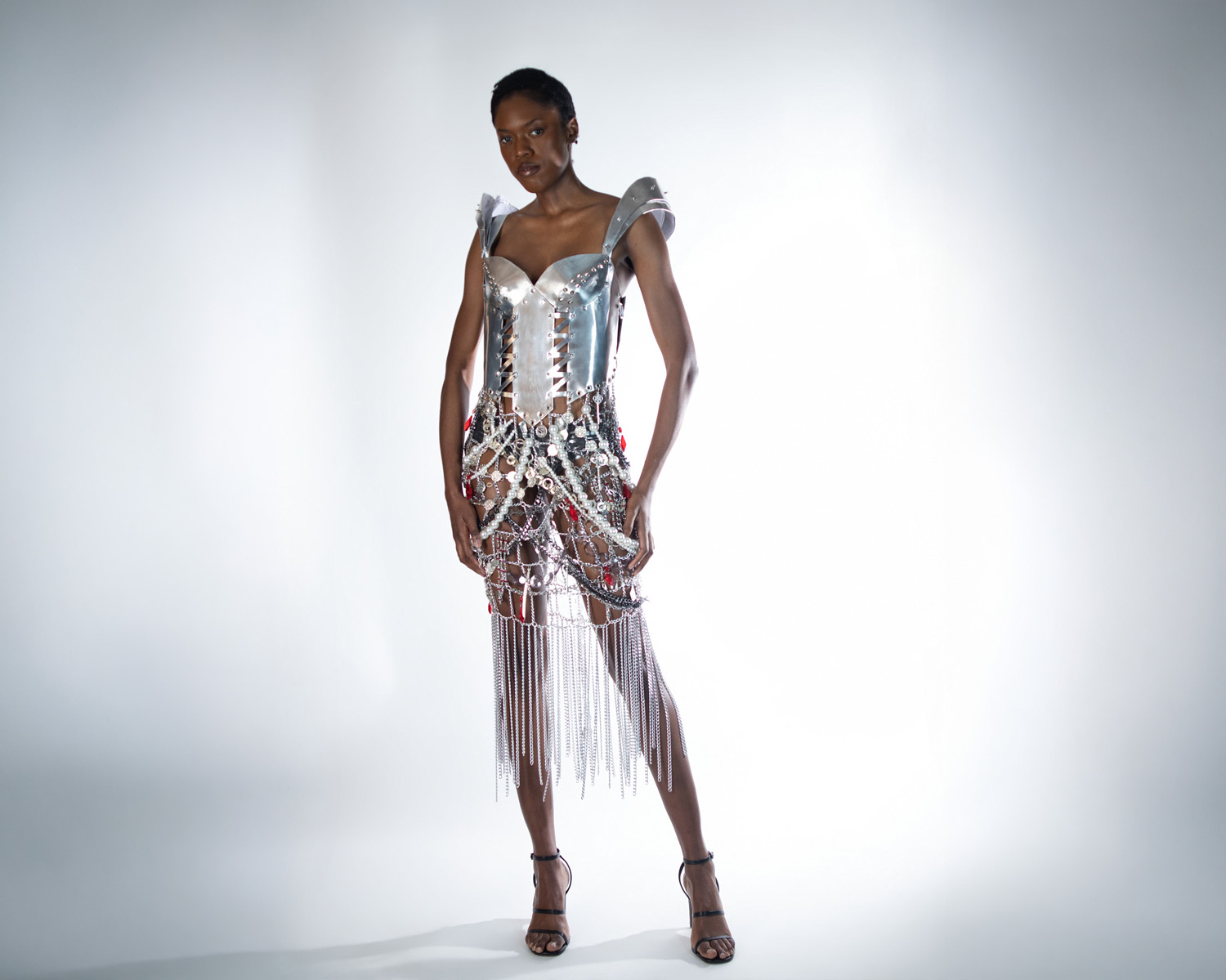
Fashion has always been more than clothing for Megan Chapman. For her, it became a way to process grief, resilience, and personal growth. Her graduate collection at the Fashion Institute of Technology is inspired by the phrase “she wore her scars like armor.” Through handcrafted metalwork and flowing textiles, Chapman explores how strength and vulnerability can exist side by side.
The phrase entered her life during one of its hardest moments. She had returned home to heal after losing her beloved emotional support bunny. During that difficult period, the words stayed with her and changed the direction of her collection.


“Hearing this phrase reminded me that I had gone through difficult times before and had always come out stronger,” Chapman says. “To me, metal became a physical representation of resilience, protection, and the emotional armor we build after experiencing pain.”
That idea became the foundation of every design. Metal represents resilience and emotional protection. Soft fabrics reveal the gentle, caring person beneath that exterior. Together, the materials express two emotions that often exist at the same time. They show that vulnerability and strength do not cancel each other out.
The collection features two distinct looks. Both include sculptural bodices finished with spikes to symbolize protection. One look pairs the structured bodice with a flowing georgette maxi skirt. The movement of the fabric softens the silhouette and introduces a feeling of openness. The second look replaces fabric with a handcrafted chain skirt that tells a more personal story.


Decorative charms hang throughout the chain skirt. Each one reflects an important part of Chapman’s life. Animal charms celebrate her love for animals. Keys represent change and the beginning of new chapters.
“The skirt symbolizes vulnerability not only through its movement, but also through the personal story told within the charms themselves,” Chapman explains. “It reveals who I am on a deeper level when someone takes the time to truly look at it.”
While the collection carries a strong emotional message, it is also a technical achievement.
Before starting the project, Chapman had never worked with metal. She taught herself new construction methods through experimentation and persistence. Every challenge pushed her to rethink the way garments could be made.
Her original plan was to weld the pieces together. She chose ultra-thin 1/64-inch aluminum because it was lightweight and resistant to rust. The material, however, proved almost impossible to weld. The heat damaged the delicate sheets and forced her to find another solution.


Instead of abandoning the concept, Chapman adapted her process. She connected the metal pieces with screw rivets and reinforced the structure with steel weld adhesive. This method preserved both the design and the strength of the garment.
Precision became essential throughout the project. Once a hole was punched into the aluminum, there was no way to undo it. Every placement affected the alignment and construction of the final piece.
Chapman approached the metal using the same principles she applies to fabric. She first draped the garments in muslin before translating those patterns into aluminum panels. The bust area proved to be the greatest challenge.
“I was still applying the same foundational skills,” she says. “I used my patternmaking and draping knowledge to shape the metal garments.”
She treated the metal almost like fabric darts. The shaping was divided into separate sections before the pieces were secured with rivets. The process completely changed how she thought about garment construction.


Comfort remained just as important as appearance. Chapman wanted the garments to feel wearable despite their rigid materials. She folded every exposed metal edge inward before lining it with neoprene. This protected the wearer while preserving the sculptural form. The spiked arm pieces also feature functioning hinges, allowing them to move naturally with the body.
One of the collection’s standout details is the crocheted chain headpiece. Chapman created it using around 250 feet of chain. The piece combines traditional crochet with industrial materials. It reflects the same balance between softness and protection found throughout the collection.

“The crochet elements bring a sense of delicacy, while the chains introduce protection,” Chapman says. “It tied the entire look together, not only visually, but conceptually.”
Experimentation shaped every stage of the project. Chapman tested different construction methods using small metal samples before beginning the final garments. This careful approach allowed her to refine techniques and solve problems before committing to each piece.


Her education at the Fashion Institute of Technology gave her the confidence to push those ideas further. Courses in draping, patternmaking, construction, digital design, and illustration built the technical foundation behind the collection. They also encouraged her to challenge traditional ideas of garment making.
“Having this range of knowledge gave me the confidence to push beyond traditional garment construction and create extravagant pieces that do not even use fabric,” she says.
At its heart, Chapman’s collection is about more than armor. It is about what armor protects. Through metal, chains, spikes, and flowing textiles, she tells a story of resilience without hiding vulnerability. The collection celebrates personal growth while embracing emotional honesty.
For Megan Chapman, armor is not something that conceals who we are. Instead, it reflects the strength we gain through experience while allowing softness to remain visible.


