
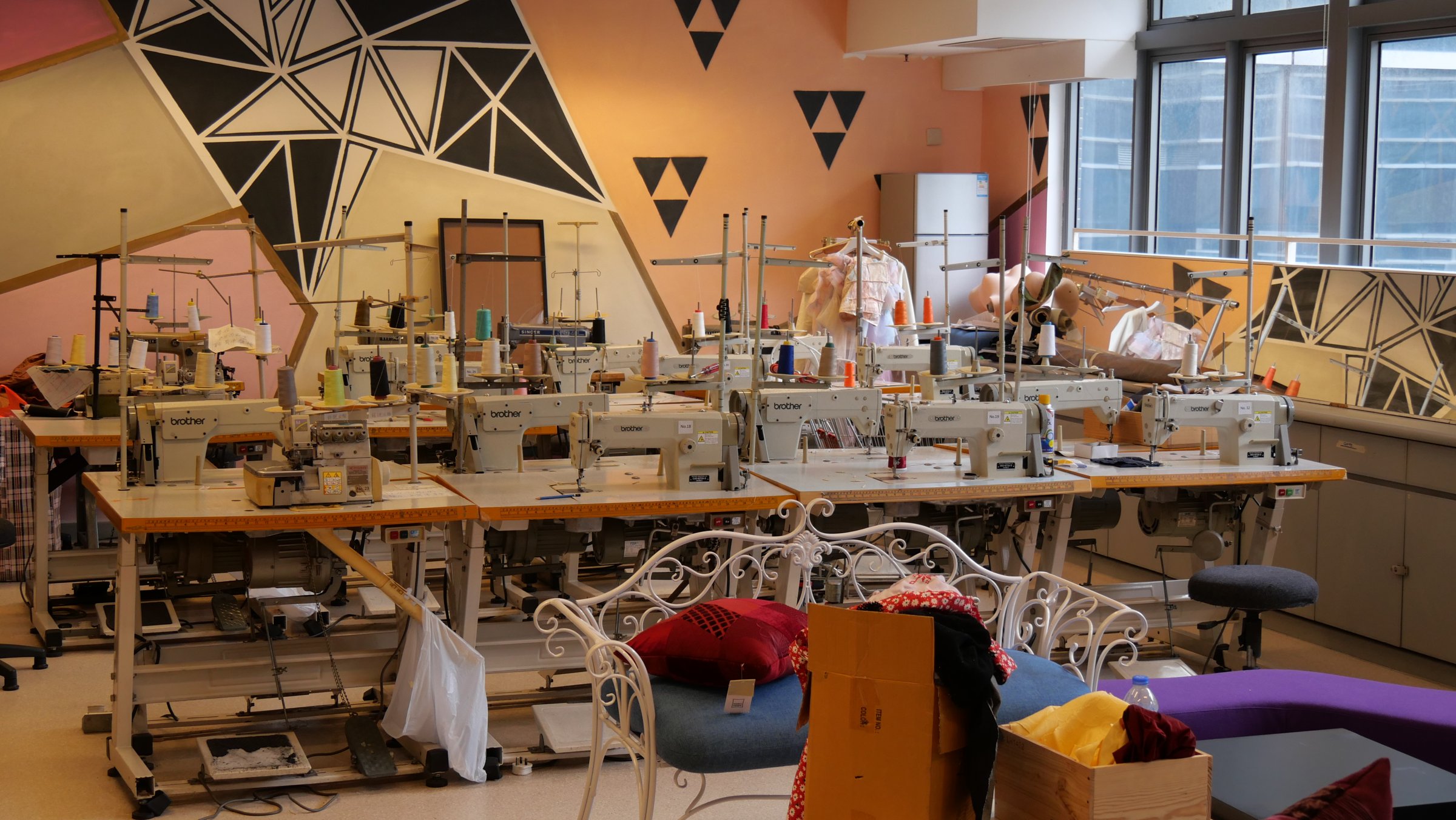
Is fashion school hard? For most students, yes. Fashion school is demanding in ways that surprise people: long studio hours, regular public critique, the physical work of making garments, and real pressure on time and money. But how hard it feels depends a lot on the school, the course and you. A technical pattern-cutting course asks for different strengths than a concept-led design degree, and a student who loves making will find some parts easier than a student who loves research. Here is what students actually do, and what makes it manageable.
The workload: it is a studio subject, not a reading subject
Most fashion courses are built around projects rather than exams. A single project can involve research, sketchbooks, fabric sourcing, toiles (test garments), fittings, final pieces and a presentation. Projects often overlap, so you may be finishing one while starting the next.
That means a lot of hours outside scheduled classes. Students commonly talk about late nights in the studio before deadlines, especially in final year when a graduate collection is due. The work is not always intellectually harder than other degrees, but it is relentless and hands-on, and you cannot cram making a jacket the night before.
Critique culture: your work gets judged in public
Crits (critiques) are central to fashion education. You pin up or present your work and tutors, and sometimes classmates or visiting industry guests, tell you what is working and what is not. Feedback can be blunt.
This is often the hardest adjustment for new students. It helps to remember that a crit is about the work, not about you, and that learning to take feedback, defend your choices and edit is exactly the skill the industry expects. Students who treat crits as information rather than verdicts tend to grow fastest.

Technical vs conceptual pressure
Fashion school asks you to be two kinds of person at once. On the technical side you are learning pattern cutting, draping, construction, and fabric behaviour. On the conceptual side you are expected to build a point of view, research deeply and tell a clear story with your collection.
Different schools lean different ways. Some are known for strong technical training; others push concept, experimentation and identity. Neither is easier, they are just hard in different directions. If you want to see how schools compare, the guide to choosing a fashion school and our Fashion Schools Directory are good places to start.
Money and time stress
Tuition is only part of the cost. Students often pay for fabric, trims, printing, tools and, in later years, the materials for a full collection. Costs vary widely by course and by how ambitious your project is, so ask schools and current students what final year really costs before you enrol.
Time is the other pressure. Heavy studio hours can make part-time work harder to fit in, and that combination of money and time is where many students feel the strain most.
What makes fashion school manageable
- Pick the right course for you. A course that matches how you like to work (making, concept, business, communication) will feel far less like a fight.
- Plan backwards from deadlines. Making always takes longer than you think. Build in time for a second toile.
- Budget materials early. Sample cheap fabrics first, reuse where you can, and ask about school stores or discounts.
- Use technicians and tutors. Studio technicians are one of the most underused resources in any fashion school.
- Find your people. Classmates are your support system now and your industry network later.
- Protect your health. Sleep and breaks are not a luxury when you are working with machines and blades at 2am.
Is it worth the difficulty?
That depends on what you want from it. School gives you structure, feedback, facilities and a network, but it is not the only route in. If you are weighing that up, read Do You Need Fashion School to Work in Fashion? If you have decided to apply, How to Get Into Fashion School covers portfolios, subjects and timelines, and How to Start a Career in Fashion maps where the course can lead. You can also browse our Best Fashion Schools in the World list.
FAQ
Is fashion school harder than other degrees?
It is not harder in every way, but it is usually more time-intensive and hands-on, with constant project deadlines and public critique.
What is the hardest part of fashion school?
Students most often mention the workload around deadlines, the critique culture, and the cost of materials, especially in final year.
Can I survive fashion school if I am not good at sewing yet?
Yes. Many courses teach construction from the basics. What matters more is willingness to practise and put in the studio hours.
Keep exploring
Cover: Sewing studio at CBCC and CIHE, Hong Kong. Photo: Peachyeung316 via Wikimedia Commons (CC BY-SA 4.0).


