
Should small labels pay celebrities to wear their clothes? Usually, no. Paying for a photoshoot or a short modelling booking is not the same as celebrity seeding, and it is a weak way to test whether influencer marketing works for fashion brands. A sitting fee buys an image. It does not buy a post, a styling relationship or a reason for that person’s audience to shop with you. If you want to know how to get celebrities to wear your clothes, start with a clear press kit, a garment someone can actually walk in, and a stylist or editor who already has a reason to look.
Paying a celebrity is not a marketing strategy
Independent designers hear the same advice on repeat: get a famous person in the clothes and the brand will take off. Sometimes a look does travel. More often, the photograph exists, the invoice is paid, and the website is as quiet as it was the week before. That is not a mystery. Audiences follow people, not product stills, and a celebrity’s audience is already being asked to buy a dozen other things.
There are two different jobs that get bundled together as “getting a celebrity to wear your clothes.” One is a paid booking: you hire the person (or their team) for a set time, you own or license the pictures, and unless the contract says otherwise, they have no obligation to post, tag, or talk about you. The other is celebrity seeding, or being chosen by a stylist: the garment is lent or given, worn to an event or in a story, and the value sits in the appearance itself. Confusing the two is how a small label can spend a season’s marketing money on the wrong thing.
The Offset story, as it was claimed
In early November 2026, a video circulated widely in which a clothing-brand owner said she had paid the rapper Offset $6,000 to model her clothes, and that the arrangement did not bring the sales she expected. Aggregator accounts such as Daily Loud amplified the clip. Some recaps described the return as effectively zero. We could not confirm the fee, the length of the booking, the brand’s identity, or the sales result in a statement from the owner, Offset, or a report in Vogue, Business of Fashion or WWD. Treat the $6,000 figure and the sales claim as the owner’s viral account, not as an audited result.
Even if every number in that video is accurate, the lesson is the same. A modelling fee pays for presence in front of a camera. It does not automatically include a post to the celebrity’s audience, a usage window on their channels, or a call to action that leads to your shop. If those things were never in the brief, it is not surprising when the pictures do not sell hoodies. The disappointment is real. The diagnosis is often a contract and a channel problem, not a failure of fame itself.
What celebrity seeding actually looks like
A few days earlier, a different kind of placement showed up in plain sight. At the 2026 LACMA Art + Film Gala, Iris Law wore a pearlescent tiled dress. She told Vogue writer Eileen Kelly the brand was called Amaramara. Up close, Kelly wrote, the dress looked almost as though it had been constructed from mother-of-pearl shells, and Law explained that it was lined in leather, “making it surprisingly soft against the skin.” That account is in Vogue’s report from the evening, published on 8 November 2026. There is no public figure, in that piece or in other reports we reviewed, for what the placement cost, and we are not going to invent one. The useful contrast is the mechanism: a stylist and a wearer choosing a garment for a highly photographed night, not a paid hour in a studio.

Seeding is not free in time or product. You still have to make a sample that fits, ship it on a deadline, and accept that it may not be worn. You also have to be findable. That is what a fashion press kit and a tight press release are for: so a stylist or editor can see the clothes, the sizes, the lookbook and the credit line without a long email chain. If your long-term plan is wholesale, the same discipline helps when you pitch boutiques and stockists. A red-carpet moment is a headline. A repeatable way of being chosen is a system.
One short distinction is worth making about celebrity labels. Wearing someone else’s design and launching your own line are different businesses. A celebrity clothing line still needs design, production, delivery and returns. The famous name can open a first order or a first press hit. It cannot replace a product people want to wear twice. That remains true when a well-known designer leaves a house to work under their own name, as we wrote when Kim Jones launched his own label. For emerging designers, that is a relief as much as a warning: you do not need to become a celebrity brand, and the unglamorous work in how to start a fashion brand still comes first. You need clothes that a stylist, a buyer or a customer can stand behind when the famous face is out of the frame.
The fair counter-argument
There are cases where paying makes sense. A campaign image can need a specific face. A lookbook can need a model whose day rate is clear and whose usage rights are written down. A micro-influencer with a tightly matched audience, a unique discount code and a posted deliverable can be a cheaper, more honest test than a celebrity sitting fee. If you sell in a category where the celebrity is already a recognised customer, and the contract includes at least one post plus tagging and a time window, you are buying distribution, not only a picture.
What does not hold up is the hope that a mid-range fee, with no posting obligation, will behave like a billboard. It will not. And “influencer marketing” is not one tactic. A stylist pulling a sample, a paid creator with a brief, and a celebrity booked for 40 minutes in a car park are three different bets. Judge each on the outcome you can actually contract for.
A practical takeaway for emerging designers
If you are deciding where the next $6,000 (or $600) should go, use this order:
- Write down the job. Do you need photographs you own, a public wearing at an event, or a post that reaches a defined audience? If you cannot name the job, do not spend the money.
- Put the kit in order first. Credits, lookbook, size range, sample lead times and a one-page story. Use the press kit and press release guides above before you approach a stylist.
- Seed before you hire. Offer a loaned sample to stylists and editors who already dress the people you care about. Track what went out, what came back, and what was worn.
- If you do pay, buy the channel. Get the deliverable in writing: number of posts, platforms, tags, usage rights, exclusivity and the date it goes live. A sitting fee alone is not a campaign.
- Measure something smaller than fame. Unique codes, referral links, saved posts, sample requests from stylists, and stockist emails are more useful than a screenshot of a celebrity in your hoodie.
Students and new labels can also be found the other way around. Keep a clear profile in The Vanilla Issue designer directory, and if school is still part of your story, in the fashion schools directory. Editors and stylists look for people they can credit accurately. Make that easy. An editorial write-up of an independent label, such as how Ocean Savage turned British pony club culture into a New York clubhouse, is closer to seeding than to a paid sitting: the work has to be choosable first. The Vanilla Issue’s feature and profile pages for emerging designers work on that same idea. They make a credit easy to find; they are not a shortcut to a red carpet.
The verdict does not change because a clip went viral. A celebrity can help a small label. A receipt for their time, on its own, probably will not. Spend first on being choosable. Visibility without infrastructure is a familiar trap: prizes are not enough if funding, production and stockists are missing, and a famous photograph has the same limit. Trade fairs and showrooms can do more for a young label than a sitting fee, which is one reason we cover seasons such as Premiere Classe. Then, if you still want to pay, pay for the part of the work that actually reaches a customer.
Keep exploring
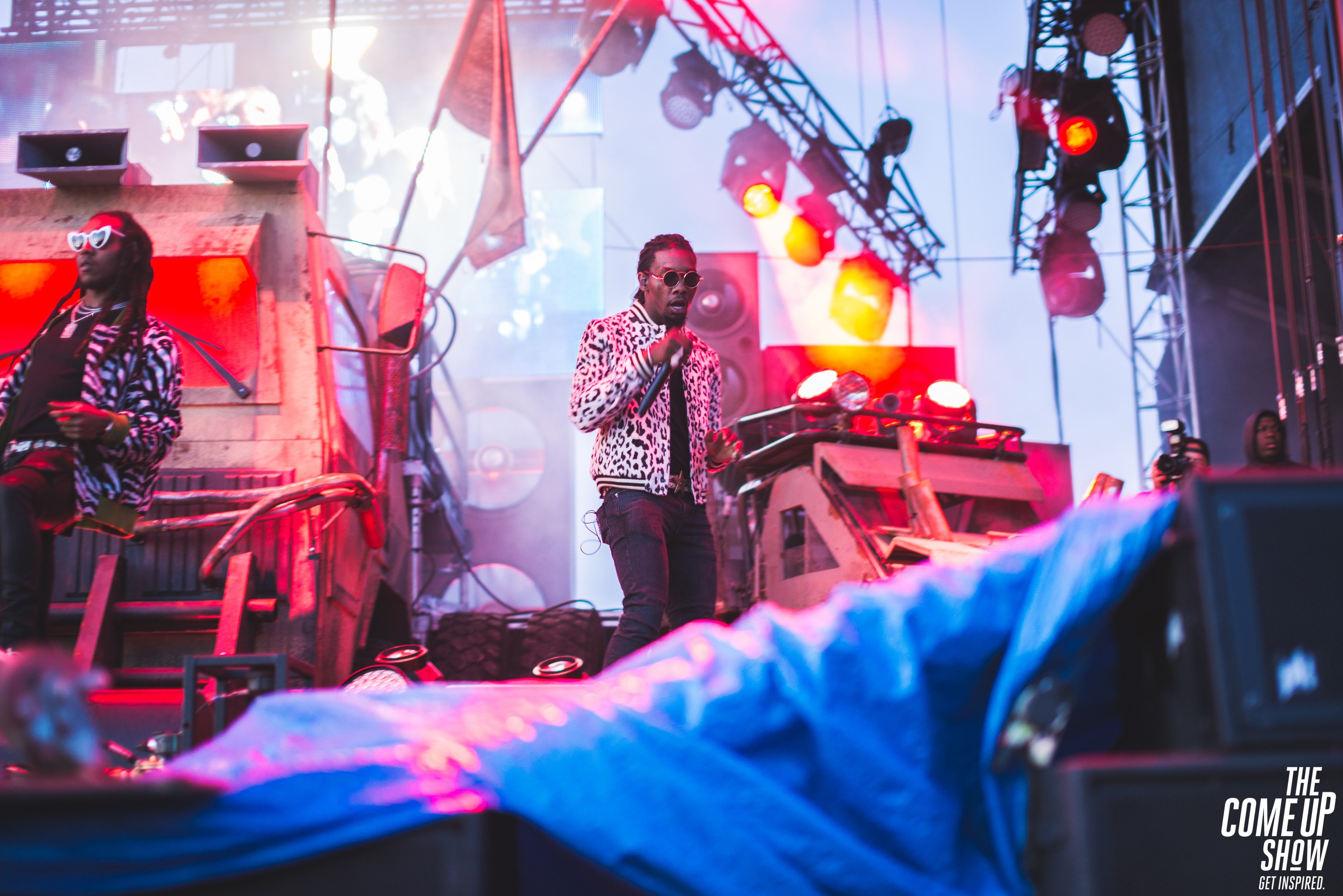
Cover: Offset performing at the Veld Festival, August 2017. Photo: The Come Up Show, via Wikimedia Commons (CC BY 2.0).


