
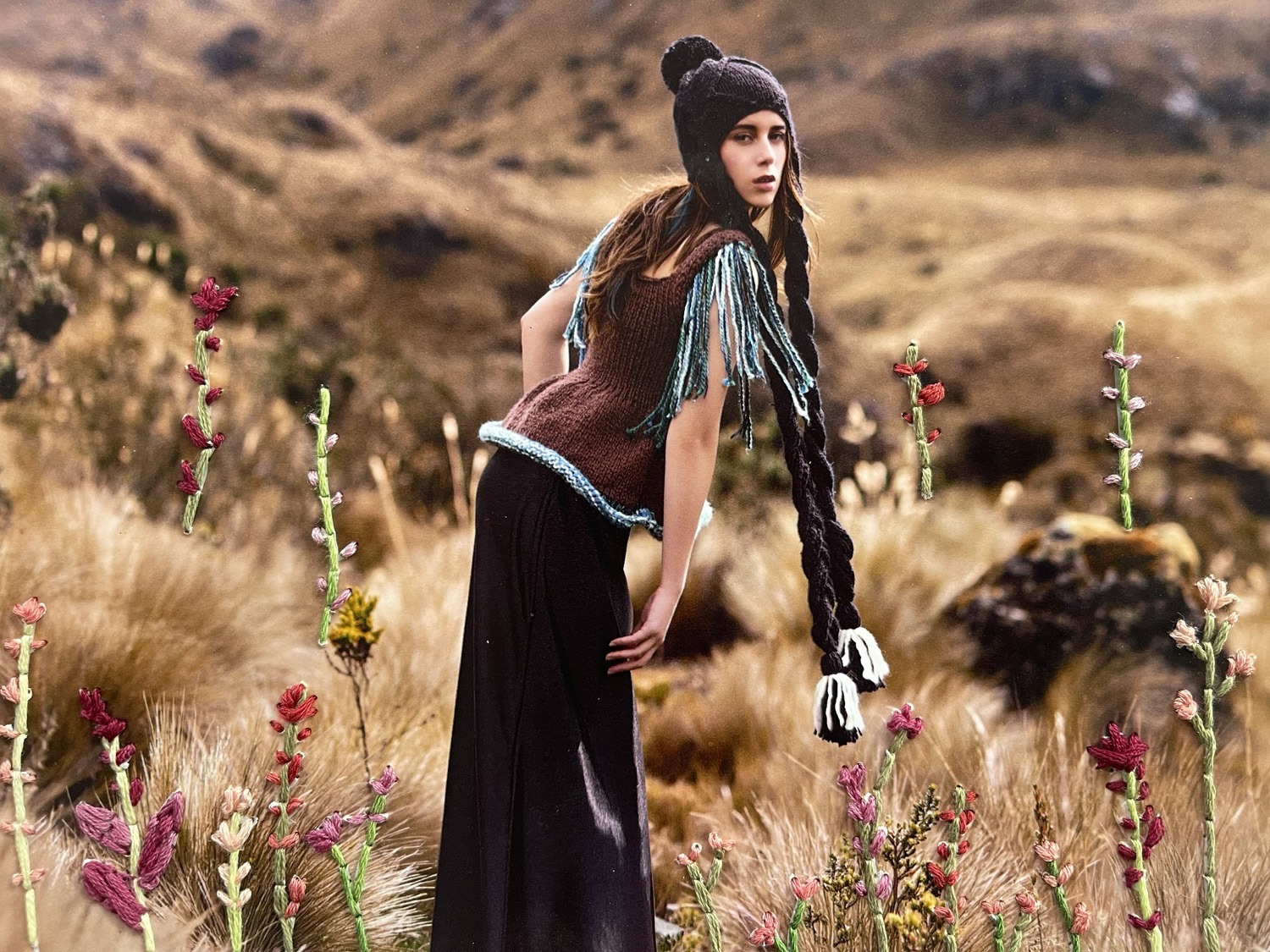
For Ecuadorian designer Lilian Alvarez, fashion is more than making garments. It is a way of understanding the world. Through her emerging label, Lilial, she combines fashion, photography, and creative direction to tell stories rooted in memory, landscape, and identity. Rather than treating nature as visual inspiration alone, Alvarez invites people to experience it with all their senses. Her work encourages us to slow down, pay attention, and reconnect with the places we inhabit.
That philosophy defines Habitar el Territorio, the editorial accompanying her graduate collection, Nevado. As her final Bachelor of Textile and Apparel Design project at the Universidad del Azuay, Alvarez set out to explore the relationship between the human body and the Andean landscape. She photographed the project in Cajas National Park and drew inspiration from the Cotopaxi volcano. Together, the garments and images present fashion and nature as equal participants in the story. The landscape does more than frame the collection, it shapes every emotion, movement, and visual decision.
Alvarez’s relationship with the landscape began long before she became a designer. She spent much of her childhood surrounded by mountains and farmland before moving to the city. Those early memories became part of her creative language. Later, studying at LCI Barcelona gave her a fresh perspective on Ecuador. Living abroad made her appreciate the country’s landscapes, artisan communities, and textile traditions even more. She realised that many people overlook this richness because they experience it every day.


Those experiences inspired Habitar el Territorio. Instead of documenting a place, Alvarez wanted to create an emotional experience. “We often visit a landscape without truly experiencing it,” she explains. “We become focused on documenting the moment, forgetting to feel the wind, the cold, the humidity, the sounds, or the colours that make each place unique.” Through the editorial, she encourages viewers to inhabit a landscape rather than simply observe it. For Alvarez, the strongest connection to a place comes through feeling it, not photographing it.
That same thinking guided every aspect of Nevado. Alvarez looked beyond Cotopaxi’s physical appearance and focused on the emotions it inspires. She designed enveloping silhouettes and layered constructions that suggest warmth, stability, and protection. Different knit structures echo the gradual transformation of the volcano over time. Flowing fringes recall melting glaciers, while the colour palette follows the mountain’s natural journey. Snowy whites transition into volcanic greys, earthy browns, vibrant greens, and open skies. Every design decision strengthens the relationship between the garments and the landscape that inspired them.

Craftsmanship also sits at the heart of the collection. Alvarez combined synthetic fibres with natural jute and sheep’s wool to create rich textures and depth. She also developed the collection alongside an artisan from Gualaceo and her mother, Gladys Criollo, who has knitted since childhood and first introduced Alvarez to the craft. That influence shaped both the collection and the identity of Lilial. By choosing knitwear for her graduate project, Alvarez honoured a family tradition while presenting it through a contemporary design perspective.
Photography played an equally important role in bringing the project to life. Shooting in Cajas National Park required flexibility from the entire team. Heavy rain interrupted the original plan and forced everyone to relocate. Instead of resisting the change, Alvarez embraced it. The experience reinforced one of the project’s central ideas: nature always has the final say. “The territory teaches us something important as well,” she says, “the ability to adapt.” That lesson became part of the story itself.


After the shoot, Alvarez extended the narrative by hand embroidering the final photographs. The stitched threads represent wind, water, flowers, and the organic forms of the Ecuadorian páramo. These details capture sensations that photography alone cannot fully express. Rather than decorating the images, the embroidery preserves the emotional traces of the landscape. It transforms each photograph into a record of lived experience and strengthens the connection between fashion, memory, and place.

Completing Habitar el Territorio also reshaped Alvarez’s own creative direction. The project confirmed that her interests extend beyond fashion design. She discovered a passion for concept development, creative direction, and visual storytelling. Today, she sees Lilial as a platform where garments, photography, and narrative work together. Through that multidisciplinary approach, she hopes to tell stories that celebrate identity while creating meaningful emotional connections.
Looking ahead, Alvarez hopes to transform more of Ecuador’s landscapes into future collections. She wants each project to introduce audiences to a different part of the country while exploring the emotions those places inspire. More importantly, she hopes international readers see Ecuador as more than a destination. “I hope people come to understand that Ecuador is not simply a destination to visit, but a place to be felt,” she says. Through Lilial, Alvarez continues to show how fashion can deepen our relationship with the landscapes that shape us and the stories they hold.


