
All images on this article appear as a courtesy of Japan Fashion Week Organization and Rakuten Fashion Week Tokyo.
DAY 3 – SEPTEMBER 2ND, 2026
EITARO – 脱
The word “datsu” in Japanese means “remove”, and the textile layering that was at the core of this collection suggested that there was something waiting to be discovered behind the veils that constructed each piece. By combining solid fabrics in primary colors with subtle textiles in opposing shades the final result in many pieces was a third, unexpected hue that was totally unique. All silhouettes were loose and very summer-friendly, and the final number with an unexpectedly long train that mimicked a sheer rainbow gave that same fresh feeling that comes right after the storm has passed.


KEIKO NISHIYAMA – Cultivating Wonder
This presentation took place in a venue with floor-to-ceiling windows that looked into a gorgeous garden, and seeing the pieces of the collection it was easy to understand why was this the perfect spot. Cultivating Wonder consisted of a few, but very precisely constructed womenswear looks in a mostly vegetal, floral palette of different shades of green, wisteria purple, jasmine white and lily blue, resulting in a calming effect that captured how the collection was inspired by the life cycle of plants. Bomber jackets that looked like orchids in bloom, dresses that mimicked water lilies in very subtle pale pinks and seafoam greens, and gauze layered over silks that turned out as textures that looked like living flowers composed a presentation where each piece looked like a living, breathing plant.


PILLINGS – Landscapes2
As one of the Japanese brands that are currently dominating the fashion zeitgeist, Ryota Murakami’s brainchild was held to high expectations, and with the presentation of Landscapes2 he certainly didn’t disappoint. With an etereal palette of whites primarily styled with muted hues of green, pink, yellow, purple and blue, many of the pieces felt like flapper-approved beachwear with cardigans, mid-length dresses and skirts, 1920s-inspired hats, subtle floral embroidery and pieces that directly referenced the oceans with irregular pleats resembling seawaves and faded dyed dresses that looked as if they had been worn all day while building sandcastles. Two different feelings converged during the show: the playfulness of happy days at the beach and the nostalgia of knowing such days might be long gone. Pillings has quite high probabilities to hit it big and go global, so an eventual move to Paris or Milano isn’t just very likely, but also well deserved, even necessary at this point.


YUSHOKOBAYASHI – Mermaid’s Tears
One of the local brands that cool Tokyo kids covet the most, yushokobayashi introduced us to a seaworld of wonder with a stage full of submarine props and treasure chests that was (both literally and figuratively) a refreshing change compared to more solemn, sometimes too serious showcases. The mix of upcycled and new textiles resulted in mermaid-like looks composed of fishnet tops in light turquoise and violet with hundreds of handsewn charms, white and pink lace dresses and blouses with fabric pink and blue roses encapsulated in sheer white lace for a dreamy environment in the stage and on the clothes as well. Instead of a traditional soundtrack, the brand invited indie band n.feni to perform their mix of noise rock with ethereal vocals, completing an ambiance where fierce individuality and mermaid-like visuals made a unique statement that definitely stood out among this season’s presentations.


DAY 4 – SEPTEMBER 3RD, 2026
TAIWAN SELECT: S’ranouir, Yentity
Two of the newest talents in Taiwanese fashion participated in this showcase to introduce the Japanese side of the industry to their ideas of minimalist luxury. S’ranouir presented a set of only monochrome outfits in silk and linen that had a definitely futuristic tone to them as they felt easy to wear and restyle in multiple ways each time. The use of adjustable straps allows infinite possibilities to use the same pieces in new configurations, and the lines were very clean and succint enough to use day-to-night without losing their freshness.


Yentity added a much needed touch of color with bright reds and neon greens styled with dark blue denim, along with printed silk dresses and shirts that felt like a refreshing contrast to the prevalence of black and whites in other brands. The laser cut tops were really nice to look at and a rare sight in this season, and adding caps to formal jackets was a clever way to take them out of context and make them a bit less “serious”, because what’s the point of fashion if you can’t have fun with your clothes?


(RE)QUAL – (re)code x (re)member
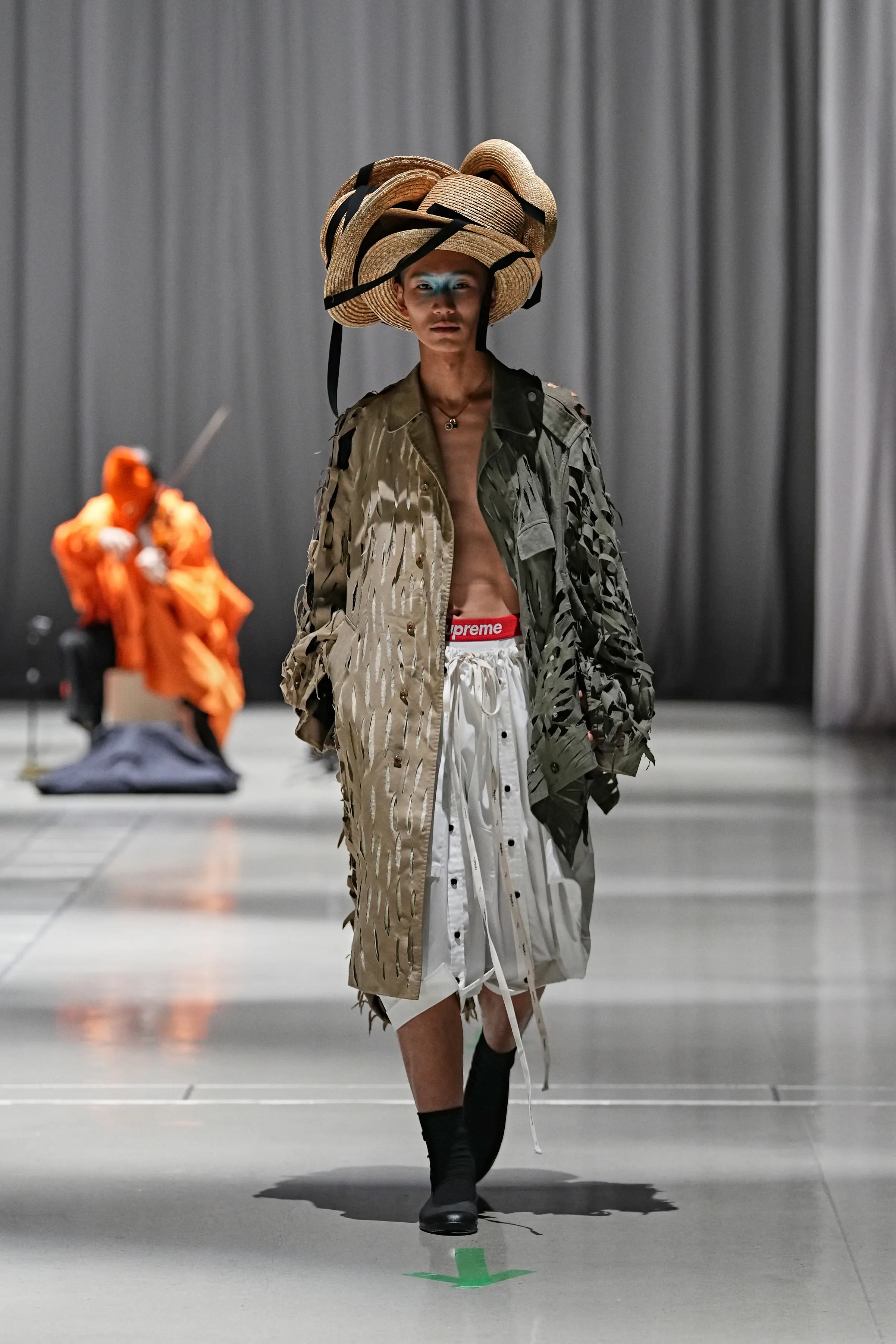
This collection had, perhaps, one of the strongest narratives in this season. Each model on the runway didn’t just wear an outfit, but incarnated a particular character inside of Tetsuya Doi’s creative universe, and as this presentation marked the brand’s 10th anniversary, they went all out. Like the inhabitants of a surreal world where what’s cute and what’s shocking aren’t necessarily separated, upcycled textiles in clashing prints were styled along hats made out of other hats, pants made out of shirts and a sinister yet endearing teddy bear suit walked together in a presentation that took reworked fabrics and deconstruction to their most experimental expression.


MIZEN – What 38CM Tells
Bridging the gap between antique Japanese craftsmanship and what today’s customers need, Mizen isn’t just another fashion brand that makes contemporary clothes with upcycled kimono fabrics: they take what was traditionally understood as part of a garment’s construction process to a whole new, elevated level. The 38 cms that the collection’s title refer to is the measurement of the textiles used in the making of kimonos, a standard that has remained unchanged. While sticking to this rule, Mizen offered womenswear and menswear that is wearable and modern while following he old patterns of layering and simplicity that ancient Japanese clothing is known for. In a palette where turquoise blue and oversized silhouettes were dominant, all looks were impeccably styled and looked like the next step in summer fashion, with a striking final outfit made of (what seemed to be) dark turquoise and black obi (the wide belt used in kimonos), an incredible masterpiece that proved that couture isn’t exclusive to any country or culture and that it can be imponent, beautiful and sustainable, all at once.


HAUTE MODE HIRATA
The hat brand by siblings Saki and Show ventured once again into ready-to-wear for men and women with their SS/27 collection. The clothes didn’t compete with the hats that accesorized them, and rather took already well constructed garments in beautiful silk and lace to a new level of artistry and sophistication. Informal outfits composed by leather jackets and trousers looked entirely renovated when paired with flower-pinned oversized hats, and little black dresses took on a new dimension with paper sparterie white hats that could perfectly fit in the British horse races. The brand hit a perfect balance between simple clothing and complex millinery, and upped the ante for what the global fashion stage can expect from them in future seasons.


C JEAN – Becoming: Boléro
Taiwanese womenswear brand took the audience inside of what truly goes on behind the scenes of fashion with their presentation of Becoming Boléro, where instead of a traditional runway show the stage was set as the brand’s atelier, complete with most of the team working in real time. With Ravel’s Boléro as background music, attendants got to see C Jean’s professionals creating couture pieces for women who have a traditional sensibility but what to look contemporary, sensual and delicate. The resulting gowns as we saw them being manufactured were mostly in raw white and fiery reds, with a strong emphasis on layered sheer fabrics and strapless cleavages that suggested more than they showed. The C Jean woman doesn’t have to do much to catch attention everywhere she goes, and watching how this woman’s wardrobe is created by their team gives an entirely new perspective to an otherwise private process.


CHARINYEH – Island Tides
The Taiwanese brand took us into their submarine wonderland with Island Tides, a collection that took the idea of drawing inspiration from sealife so seriously that the models wore beanies that resembled puffer fish scales, and their hair and makeup looked like they had just come out of swimming in the oceans. Seafoam was expressed in a myriad of ways: in the texture of oversized pants, as shiny, somewhat plastic white skirts and cardigans, in gauze and silk appliqués on the hemmings of blouses and dresses. This was the most original expression of the sea-inspired trend that was a common theme in this season of Tokyo Fashion Week, and it demonstrated the brand’s ability to rethink a concept under their own terms with their quintessential touch of textile experimentation.


SONIA CARRASCO
Sonia Carrasco from Spain has mastered the art of deconstruction in a subtle, understated way that doesn’t follow the traditional system of rebuilding clothes from scratch, in sometimes unpractical ways. An unfinished hemming, a slightly unstitched jacket: it’s always something apparently small that catches your eye and reveals her deep understanding of how garments work that led her to create and execute her ideas. For this presentation, she stuck to mostly classic trench coats, sweaters and two-pieced suits in wearable hues of greys, browns and raw whites, but under a contemporary reinterpretation where white threads and outer stitching were a central element along with longer-than-usual pieces layered in monochrome combinations. In Sonia’s creative universe, “discreet” doesn’t mean “boring” and “loud” isn’t always better: she lets her attention to details and ability to rework wardrobe staples in a fresh way do all the talk.


