
To get into fashion school, you usually need a strong portfolio, a personal statement, and the general academic qualifications your country or school requires. A portfolio matters most: admissions tutors want to see how you research, experiment and make, not just whether you can draw. Many students take an optional foundation or prep year first. A bachelor’s degree in fashion typically takes three to four years, depending on the country. Below we break down the portfolio, the subjects that help, what you study once you’re in, and a realistic timeline. When you’re ready to compare programs, start with our Fashion Schools Directory.
What fashion schools look for in a portfolio
Your portfolio is the clearest evidence of how you think. Schools differ in detail, but most admissions teams are looking for the same core qualities:
- Research. Where ideas come from: references, photography, archives, materials, places, people. Show the starting point, not only the finished look.
- Process. Sketchbook pages, development sheets, failed experiments and how one idea led to the next. Process often carries more weight than polish.
- Making. Samples, toiles, draping, knit or print tests, garments, even small 3D pieces. Evidence that you can turn an idea into something physical.
- A point of view. A sense of what interests you and why. Tutors would rather see a clear, curious voice than a collection that copies current trends.
- Range with focus. Two or three developed projects usually say more than a dozen unrelated images.
How to build one
Start with a theme you genuinely care about and document everything: photos, collage, fabric swatches, notes. Develop it through drawing, but also through photography, cutting, draping on a mannequin or rearranging found garments. Edit hard at the end. Order projects so your strongest work opens and closes the portfolio, and check each school’s format rules (digital vs physical, page counts, file sizes) well before the deadline. Many schools publish portfolio guidance and run open days or portfolio reviews; use them.
If drawing isn’t your strongest skill, that is not automatically a barrier. Many programs value concept and making as much as illustration, which is why choosing the right course matters. Our guide on how to choose a fashion school covers how to read a program’s priorities.

What qualifications do you need for fashion school?
There is no single global standard. Requirements depend on the country, the school and the level of course, so always check the admissions page of each program you apply to. The general patterns look like this:
- United Kingdom. Many applicants complete a one-year Art and Design Foundation after school, then apply for a three-year BA, usually through UCAS. Schools typically ask for a portfolio plus school qualifications, and some offer places based heavily on the portfolio and interview. See schools in our UK directory, including Central Saint Martins and London College of Fashion.
- United States. Most BFA programs are four years. Applications usually combine a portfolio, high school transcripts, essays and sometimes recommendations. Art schools tend to weight the portfolio heavily. Explore the US directory, including Parsons School of Design.
- France and wider Europe. Expect a mix of private fashion schools and public art schools, often with entrance tests, interviews or portfolio reviews alongside a school-leaving diploma. Browse the France directory.
- International applicants. Schools teaching in English usually ask for proof of English proficiency, and visa timelines can add months to your planning.
For master’s programs (MA or MFA), schools generally expect a relevant bachelor’s degree or equivalent professional experience, plus a portfolio that shows a more developed practice.
What subjects do you need for fashion design?
Few schools require one specific subject, but some help a lot:
- Art and design. The most useful preparation, because it builds the research and sketchbook habits a portfolio depends on. Some schools strongly prefer it.
- Textiles or design and technology. Good for construction and material knowledge.
- Art history, history or English. Useful for research, writing and contextual studies, which are part of most degrees.
- Media, photography or digital design. Increasingly relevant for presenting work and for courses that use digital tools.
If your school didn’t offer these, you can build the same skills independently through short courses, evening classes, online tutorials and simply making things. A foundation year exists partly to fill those gaps.
What do fashion students study?
Course content varies, but most fashion design degrees combine studio practice with theory. Typical areas include:
- Design and research: developing concepts and collections from initial ideas.
- Pattern cutting and construction: flat pattern, draping, sewing and tailoring.
- Materials: textiles, print, knit, embellishment and sometimes sustainable sourcing.
- Drawing and illustration: by hand and increasingly with digital and 3D software.
- Contextual and cultural studies: fashion history, theory and essay writing.
- Communication: presenting work, styling, photography and portfolio building.
- Industry and business: on some courses, an introduction to production, brand building and the market, often with placements or internships. For commercial careers, see Fashion Buying and Merchandise Planning.
The final year usually centres on a graduate collection or major project. Specialist degrees in areas like fashion communication, marketing, textiles or menswear shift the balance between these subjects, so read module lists closely.
How many years does it take to study fashion?
- Foundation or prep year (optional): about one year.
- Bachelor’s degree (BA or BFA): typically three years in the UK and much of Europe, four years in the US. Some courses add a placement year.
- Master’s degree (MA or MFA): usually one to two years.
- Short courses and diplomas: from a few weeks to two years, useful for testing your interest or building a portfolio.
So most people spend three to five years from starting a foundation to finishing a bachelor’s degree, and longer if they continue to a master’s.
A realistic application timeline
- 12 to 18 months before: research schools, attend open days, start a sketchbook habit.
- 9 to 12 months before: develop two or three portfolio projects; draft your personal statement.
- 6 to 9 months before: check deadlines and requirements for each school; get feedback on your portfolio.
- 3 to 6 months before: submit applications, prepare for interviews or entrance tasks.
- After offers: sort funding, housing and, if relevant, visas.
Deadlines differ widely between countries and schools, so treat these as a guide and confirm dates directly with each program.
FAQ
Is it hard to get into fashion school?
Competitive schools receive many more applicants than they have places, so a focused, personal portfolio makes a real difference. Plenty of excellent programs are accessible with good preparation.
Do I need to be good at drawing?
Drawing helps, but schools increasingly value research, making and ideas. Show how you think through several media. See also Can I Be a Fashion Designer If I Can’t Draw?
Can I apply without studying art at school?
Often yes, if your portfolio is strong. A foundation year or short courses can help you build one.
How long is a fashion design degree?
Usually three years in the UK and Europe and four years in the US, plus an optional foundation year.
Keep exploring
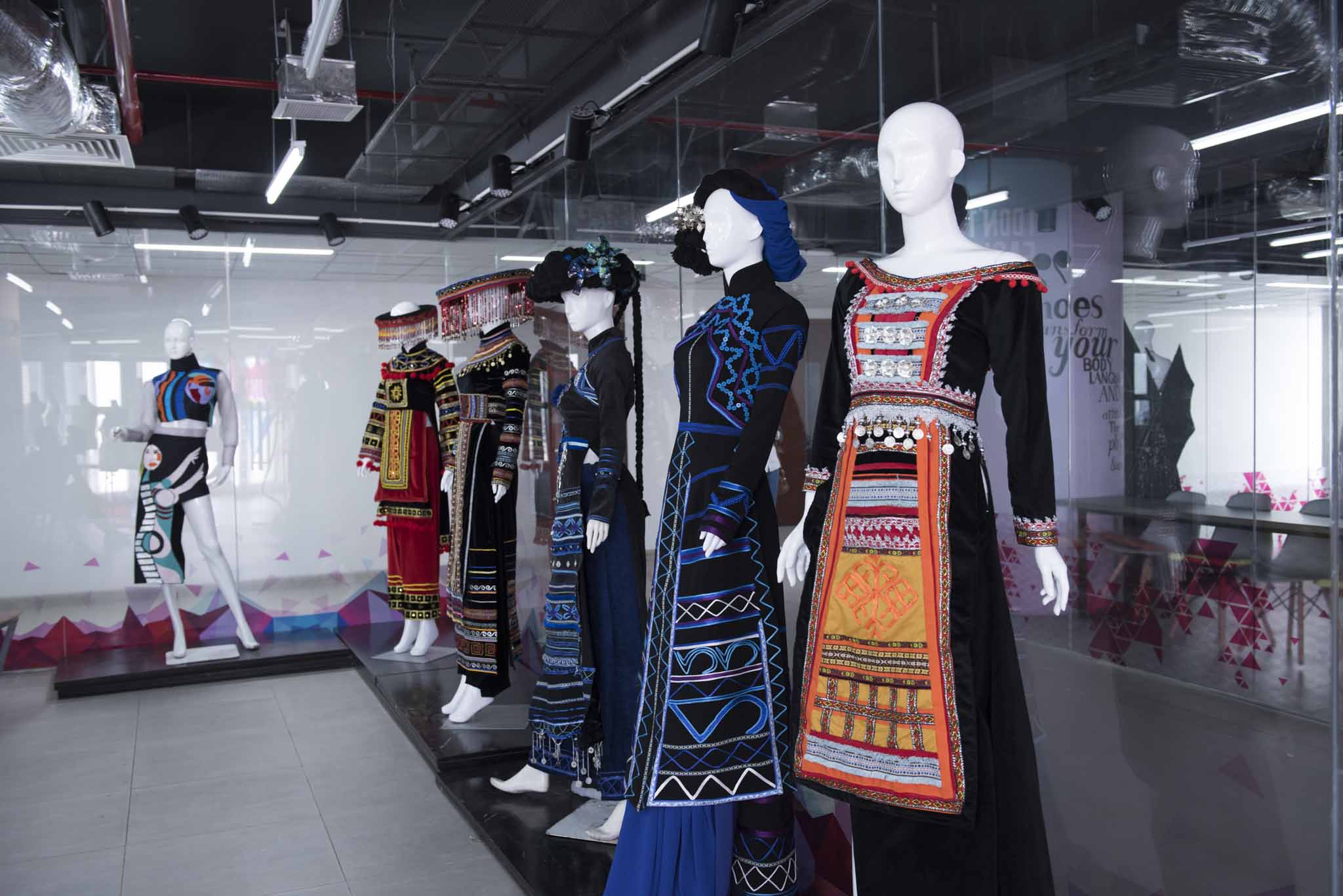
Cover: HIU fashion classroom. Photo: Congnamphuong via Wikimedia Commons (CC BY-SA 4.0).


