
Ready-to-ship vs made-to-order: which is safer for independent labels? It depends what you are trying not to break. A pre-order or made-to-order model is safer for cash, because you commit fabric and factory time after someone has paid or at least pledged. A ready-to-ship model is safer for trust, because the customer gets the garment when they want it. After a year of delays, Hanifa’s founder chose ready-to-ship, and told Vogue the inventory investment was “expensive but necessary.” For a small label, the safer path is usually a hybrid: keep a tight ready-to-wear core in stock, and use made-to-order for the costly or unusual pieces you cannot afford to guess.
Made to order vs ready to wear, in plain English
People mix these phrases up, so here is a clean split. Ready-to-ship (a ready-to-wear model with stock on hand) means the piece is already made, or is sitting in a warehouse, when the customer clicks buy. Made-to-order means you start production after the order, often with a stated lead time. A pre-order model for a fashion brand sits in the middle: you collect payment or deposits against a drop, then produce a committed quantity. All three can be “ready-to-wear” in the fashion sense (as opposed to couture). The difference is when the money and the fabric have to move.
Each model fails in a different direction. Ready-to-ship fails as leftover stock, markdowns and, at worst, overproduction that never should have been made. That is one reason unsold product shows up in arguments about greenwashing in fashion: a “conscious” drop that quietly excess-produces is still waste. Made-to-order and pre-order fail as waiting. If the factory slips, or you under-communicate, the customer who trusted you with an occasion date is the one who pays.
What Hanifa actually changed
This is not a theoretical debate. In November 2026, Vogue reported that Hanifa, the label Anifa Mvuemba founded in 2011, was relaunching after a little over eight months away, with a new collection and an updated business model. The biggest operational change, Vogue wrote, was “switching to a fully ready-to-ship model, versus a past pre-order model.” With no pre-order period in which the brand could produce only a committed number of styles, the company “has fronted the entire new collection,” which Mvuemba called “expensive but necessary.” She planned to use real-time sales data to decide what to produce next, and said holding inventory also made it possible to ship by sea rather than air, which cuts costs. “People want their things when they want their things,” she told Vogue.
The reason for the pause matters here. Vogue reported that orders from the brand’s Hanifa Friday sale the previous November failed to ship on time because of production delays and supply chain issues, and that some customers said months passed without communication or delivery. Hanifa said it was eventually able to fulfil those orders or issue refunds. In March, Mvuemba posted a statement, apologised, and announced a hiatus. The Cut reported that she had announced an indefinite pause in March due to “several manufacturing delays.” In an interview with theGrio, published on 12 November 2026, she said a big priority for the return “was having the product ready to ship,” and that the collection would launch on 18 November.

Read that sequence as a customer-trust problem first, and a cash-flow problem second. Pre-order had protected the brand from making units nobody wanted. It had not protected customers from waiting. When Hanifa came back, Mvuemba chose the more expensive model because the cheaper one had already cost her something harder to rebuild than margin. That is the serious case for ready-to-ship. It is also a reminder that “safer” depends on which risk you can survive.
How much stock to produce
This is where independent labels usually get stuck. You cannot “front the entire collection” if you do not have the cash, and you should not copy a 15-year-old brand’s inventory bet on your second drop. You can still steal the logic. Start with a small number of proven shapes, in a tight size run, and treat everything else as made-to-order or as a later replenishment. Watch sell-through the way a merchandise planner would. Our guide to fashion buying and merchandise planning is built for that: forecasting, open-to-buy, and not drowning in unsold product. If you are still setting the company up, read how to start a fashion brand first, then decide how much stock to produce.
A simple way to decide depth:
- Core, ready-to-ship. The styles people already reorder, in the sizes you actually sell. Fund these first. Replenish from data, not from optimism.
- Statement or costly pieces, made-to-order. Anything with expensive fabric, a long process, or a shape you have never sold. State the lead time on the product page, and keep it honest.
- A pre-order only when the terms are clear. Open it for a fixed window, name the ship date, and explain what happens if that date moves. If you cannot fulfil or refund on time, do not open the pre-order.
- Leave room in the budget. Stock you cannot pay to store, photograph, pack and possibly discount is not an asset. It is a delay you have already bought.
If you sell wholesale as well as direct, the stock question gets sharper, because boutiques will want delivery dates you can keep. That is part of getting a fashion brand stocked: a buyer would rather have a smaller, reliable delivery than a large one that slips. Showrooms and fairs, including seasons we have covered such as Premiere Classe, only help if that delivery date is real.
The fair counter-argument
Ready-to-ship is not automatically the grown-up choice. Inventory ties up money you might need for rent, samples or salaries. It pushes you toward safer colours and safer sizes. It can also create the waste problem you thought you were too small to have. We have written about how small labels are often the ones doing the unglamorous sustainability work, which is harder to keep up if a ready-to-ship drop is overproduced. A well-run pre-order or made-to-order line, with conservative dates and weekly updates, can be more responsible than a studio full of unsold units. Plenty of independent designers work this way on purpose, and their customers accept a wait when the wait is real.
Hanifa had years of demand, a loyal customer base and, even then, had to treat the switch as a serious investment. A new label copying only the “everything in stock” headline, without the cash or the sales history, can fail faster than it would have on pre-order. Prizes and press are not a substitute for that cash. Fabric prices can also move quickly, as we have reported on rising material costs for designers in the US. The model is not a moral ranking. It is a match between cash, lead times and the promise on your site.
A practical takeaway for emerging designers
Do not pick a model because it sounds more premium. Pick it because you can keep the promise.
- Write the ship date on every product page, and do not hide it in the FAQ.
- If you pre-order, cap the window, name the factory lead time, and decide in advance how you will refund if you miss it.
- If you go ready-to-ship, start narrower than you want to. A small core that actually leaves the building is safer than a full lookbook in boxes.
- Use sales data, even if that is a spreadsheet and last season’s invoices, before you double a quantity.
- When you feel burnt out by the logistics, that is a business-model problem as well as a personal one. We look at whether it is okay to pause the brand in a companion piece.
The safer model is the one you can fund and explain. Hanifa had to learn that the expensive option can be the one that protects the relationship. Most emerging designers will need a smaller version of the same idea: stock what you can stand behind, make the rest to order, and never let a launch date become a fiction. Buyers and editors still need to find you. The Vanilla Issue’s feature and profile pages for independent designers can help with that, but they do not replace a stock plan you can actually fund.
Keep exploring
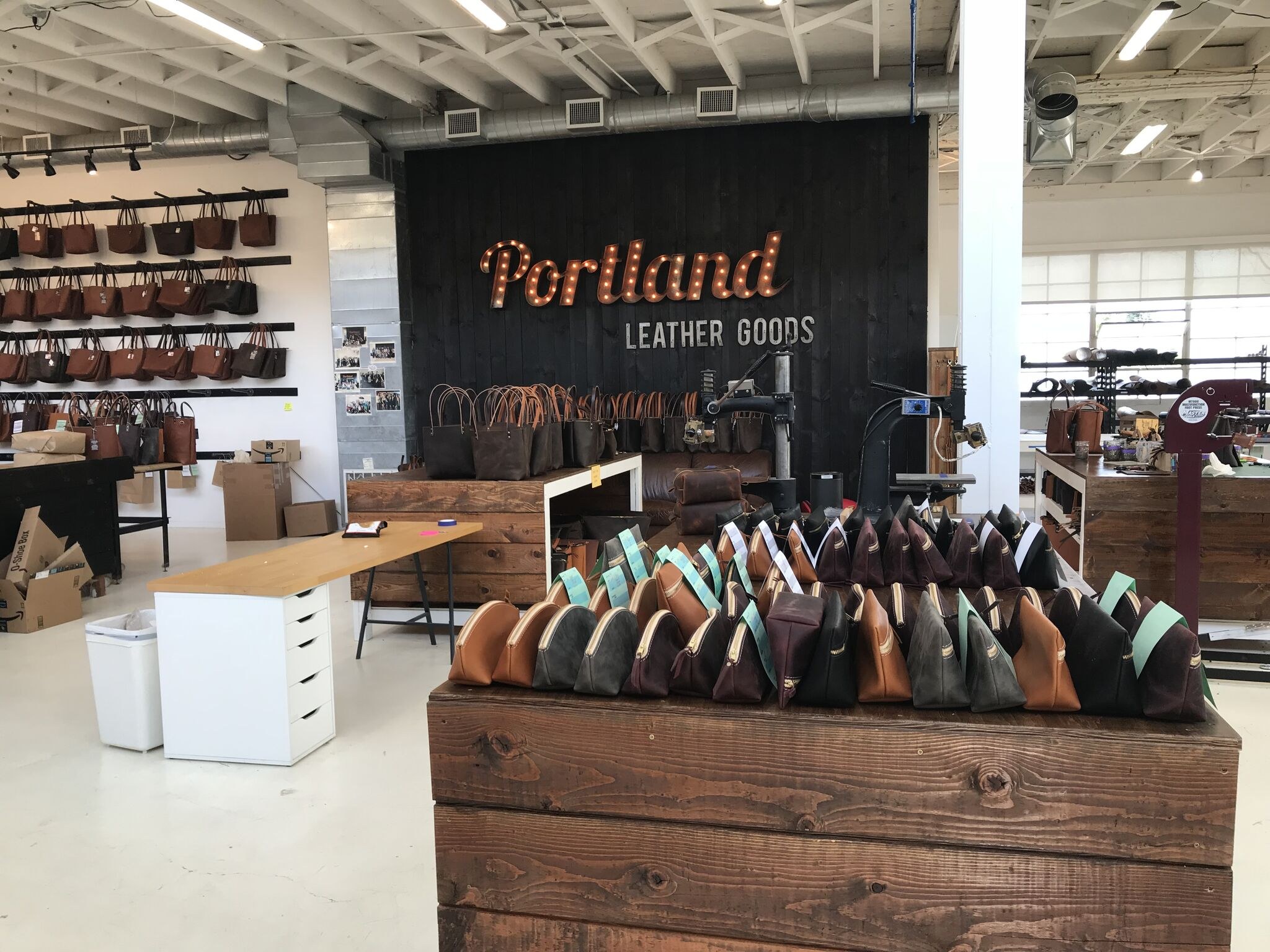
Cover: Finished leather goods ready in the Portland Leather Goods workshop, Portland, Oregon, 2025. Photo: Servinemilio, via Wikimedia Commons (CC BY 4.0).


