
Can you be a fashion designer if you can’t draw? Yes. Drawing is one way designers communicate ideas, but it is not the only one, and it is not what makes a designer. Many work through draping on the stand, collage, photography, 3D software or by making samples directly. The nuance: some courses and jobs still expect basic sketching, especially for applications and technical roles. You do not need to be an illustrator, but it pays to be able to get an idea onto paper clearly enough for someone else to understand it.
Designing and drawing are not the same skill
Fashion illustration is a craft of its own. Design is about decisions: silhouette, proportion, fabric, construction, colour, and the idea that ties a collection together. A beautiful sketch of a weak idea is still a weak idea. A rough sketch of a strong one can be developed by a team.
In the industry, a lot of drawing is functional. Technical flats (flat, precise drawings showing seams, darts and closures) matter more day to day than expressive illustration, and they are often made in Illustrator or CAD rather than by hand. That is a learnable skill, closer to diagramming than to art.
Other ways designers develop ideas
- Draping: pinning and shaping fabric directly on a dress form. Many designers find form this way before any drawing exists.
- Collage and research boards: combining images, fabric swatches, textures and references to build a mood and a direction.
- Photography: shooting drapes, toiles and found objects, then drawing over or cutting up the prints.
- 3D design: tools such as CLO 3D and Browzwear let you build and fit garments digitally. They are increasingly used in both education and industry.
- Making and sampling: working through toiles, prototypes and fabric tests, so the garment itself becomes the sketch.
- Collaboration: designers regularly work with illustrators, pattern cutters and technical designers. Knowing what you want and explaining it well matters as much as drawing it yourself.

What fashion schools actually look for
Schools vary, so read each course’s portfolio guidance carefully. Some still ask for observational drawing or figure sketches. Others are more interested in research, experimentation and how you develop an idea from a starting point to an outcome. Across most programmes, process tends to carry real weight: sketchbooks that show thinking, testing and editing, not only finished images.
If drawing is not your strength, lean into the methods above in your portfolio and show clearly how your ideas evolve. Include some drawing anyway, even simple line work, because it shows you can communicate visually. Our guide to how to get into fashion school covers portfolios in more detail, and you can compare programmes in the Fashion Schools Directory or our list of the best fashion schools in the world. If you are weighing options, how to choose a fashion school is a good place to start.
Where drawing matters more, and where it matters less
Drawing tends to matter more in roles that communicate design quickly to others: design assistants presenting ideas in fittings, technical designers producing flats, and illustrators themselves. It matters less in roles built around fabric, fit and making, such as pattern cutting, draping-led couture work, textile development and 3D garment design. It also matters less as you move into directing a vision, where editing, references and clear communication do much of the work. For a wider view of roles, see how to start a career in fashion, and for how digital tools are changing the job, will AI replace fashion designers?
How to get better at drawing anyway
You do not need talent to reach a useful level. Practise a basic figure template (a croquis) until it is automatic, then focus on drawing garments over it. Learn flats in Illustrator. Draw from life rather than from other sketches. Ten minutes a day over a few months usually does more than an occasional long session. The aim is clarity, not style.
FAQ
Do I need to draw well to get into fashion school?
Not necessarily. Requirements differ by school and course. Many value research, process and ideas, though some ask for drawing in the portfolio. Check each course’s guidance. If you are still deciding whether school is right for you, read do you need fashion school to work in fashion?
Can I design clothes digitally instead of sketching?
Yes. Illustrator for flats and 3D tools such as CLO 3D are widely used. Digital work still benefits from understanding fabric and construction.
What matters more than drawing?
A clear point of view, an understanding of how garments are built, and the ability to develop and explain an idea.
Keep exploring
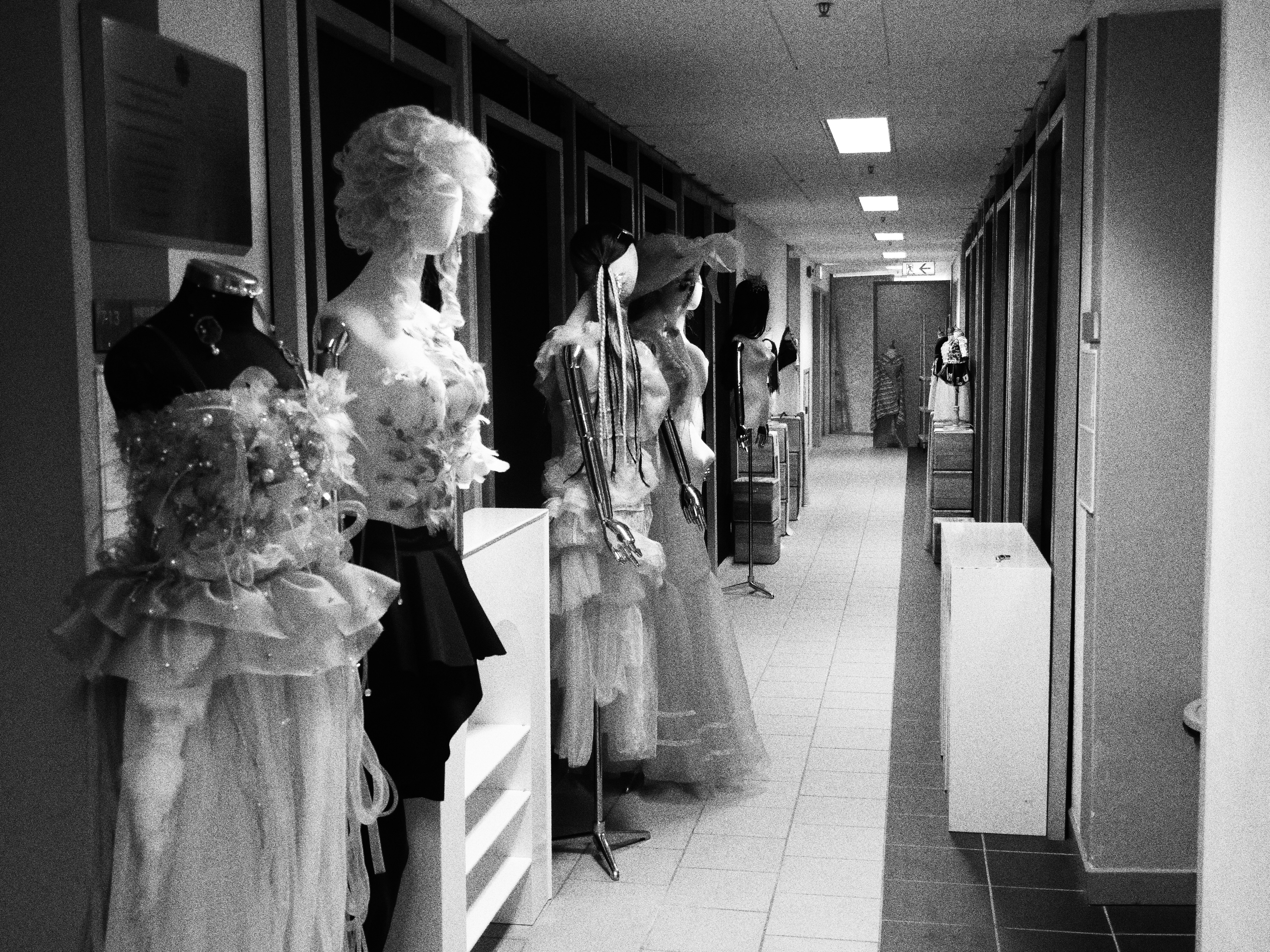
Cover: Fashion Design Unit of CBCC, Hong Kong. Photo: Peachyeung316 via Wikimedia Commons (CC BY-SA 4.0).


