
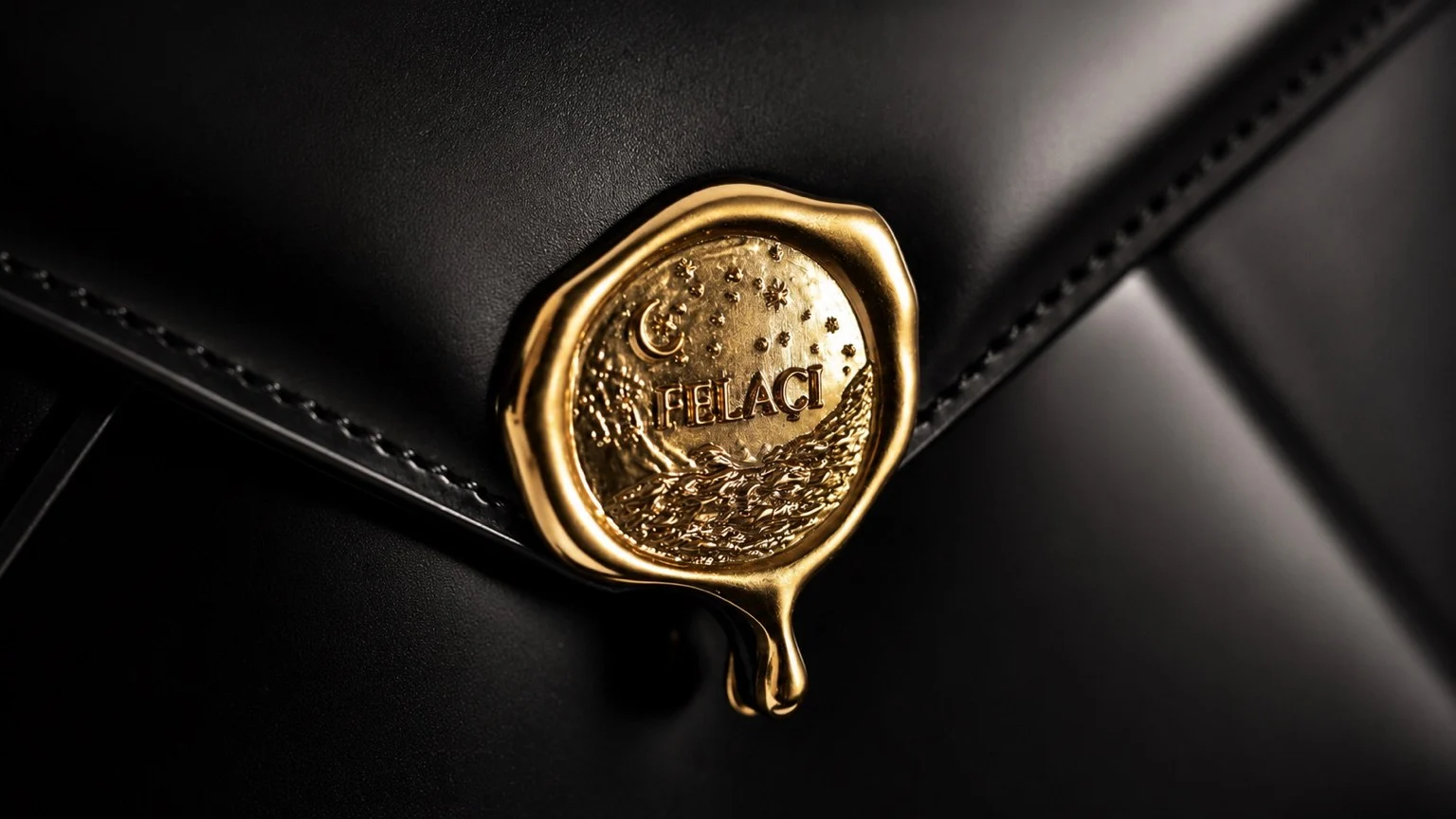
The softened rim and falling drop of wax become the hardest details to preserve in metal. For FELAÇI co-founders Zainab and Ibad Qureshi, the seal at the centre of Seal 22 is the point around which a bag takes shape. Its irregular outline meets the crisp folds of an envelope in full-grain box calfskin, bringing the intimacy of a personal mark into an object intended for everyday life.
The London-based leather house develops its pieces with artisans in Pakistan. The siblings arrive at that work through different experiences. Zainab, its creative director, has a background in film, anthropology and politics. Ibad studies Business Administration and Entrepreneurship and Innovation before bringing his interest in leather into product development. Together, they connect the way an object looks with how it feels to carry or wear.
Ibad traces that interest to a jacket his parents bought him in Islamabad when he was six. “I even slept in it,” he says. His attachment to the aviator-style bomber becomes a search, as he grows older, for the right combination of hide and fit. Zainab approaches clothing through the people inhabiting it, attentive to how leather falls against a body and changes through wear.
Their responsibilities reflect those interests without separating design into fixed territories. Zainab leads creative direction, including the photography through which someone first encounters a piece. Ibad works with makers on hide preparation and selection, fit and construction, while coordinating production and the commercial side. Both remain involved throughout sampling. “A different hide can change the silhouette enough for us to reconsider a cut,” Ibad explains.
The name FELAÇI comes through their family, inspired by Falasi, camel- and goat-hair textiles from Sindh and Bahawalpur. Ibad describes women weaving at wooden looms, carrying patterns in memory. For the siblings, that transmission of knowledge offers a model for their own relationships with makers. Their father’s immediate response to the name makes the connection personal as well as material.
Working between London and Pakistan also shapes Zainab’s visual references. She notices the proportions of façades and openings in London, and carved surfaces and patterned screens in Pakistan. Those observations enter a bag through its outline and surface rather than a direct illustration of architecture. A clear, composed shape can hold intricate detail without losing its definition.
Seal 22 begins with another family connection: a signet ring passed from Zainab’s grandmother to her mother. “It made me think about how a small object can hold a strong sense of identity and belonging,” Zainab says. Her interest in seals as marks of authorship, ownership and privacy grows from the history carried by that ring, rather than from hardware considered in isolation.


The resulting engraving draws on Ottoman imagery. A crescent and stars sit above a textured landscape that suggests land or rippling water without settling into a single place. Zainab wants an owner to keep discovering details, bringing personal memories to the surface. The seal gives the envelope a centre, while the enclosed contents reinforce her interest in privacy and keeping something close.
Resolving that relationship takes three years. The siblings coordinate box-leather finishing abroad with their leather artisans’ methods in Pakistan, developing the envelope and seal together through repeated samples. Smooth full-grain box calfskin holds the clean folds and defined shape Zainab wants. Against it, the irregular hardware catches the light, retaining something of wax despite its different material.
“The challenge was to make something deliberately irregular with great precision,” Zainab explains. Working with jewellers, she refines the silhouette of the rim and drop while preserving the engraving within it. Finding a suitable base metal and achieving the intended 22kt gold-plated finish are part of that development. The number in Seal 22 refers to the gold’s purity.
The makers contribute judgement throughout. Ibad describes specialists from family workshops who can anticipate how a cut will behave in a hide or how a small adjustment will affect the seal’s relief. “Their insight can help us find a better way of achieving what we had imagined,” he says. A drawing begins the conversation, but the material can redirect it.


Khizan carries that exchange into a botanical surface. Named for autumn, the bag draws on Zainab’s interest in carved leaves bringing movement to ordered architectural forms. Leather artisans develop its surface through leaf embossing and handwork. The tote remains an everyday object, its leather softening and changing with use, extending the seasonal idea beyond its initial appearance.
The jackets return to Ibad’s original concern with hide, weight and fit. Shoulders must sit comfortably and allow movement; full-grain leather retains its individual character. Over time, folds settle into sleeves and touched surfaces develop patina. The siblings are also developing women’s and men’s footwear alongside two new collections, thinking increasingly about how their pieces relate to one another.
For Zainab, borrowed family clothes already demonstrate what longevity can mean. A father’s blazer, a brother’s jacket and a mother’s eye for bags become part of her own taste. “Affection changes how we see an object,” she says. FELAÇI begins with that possibility: a carefully made piece acquiring significance through the person who keeps reaching for it.
Photography: Zainab Qureshi


