
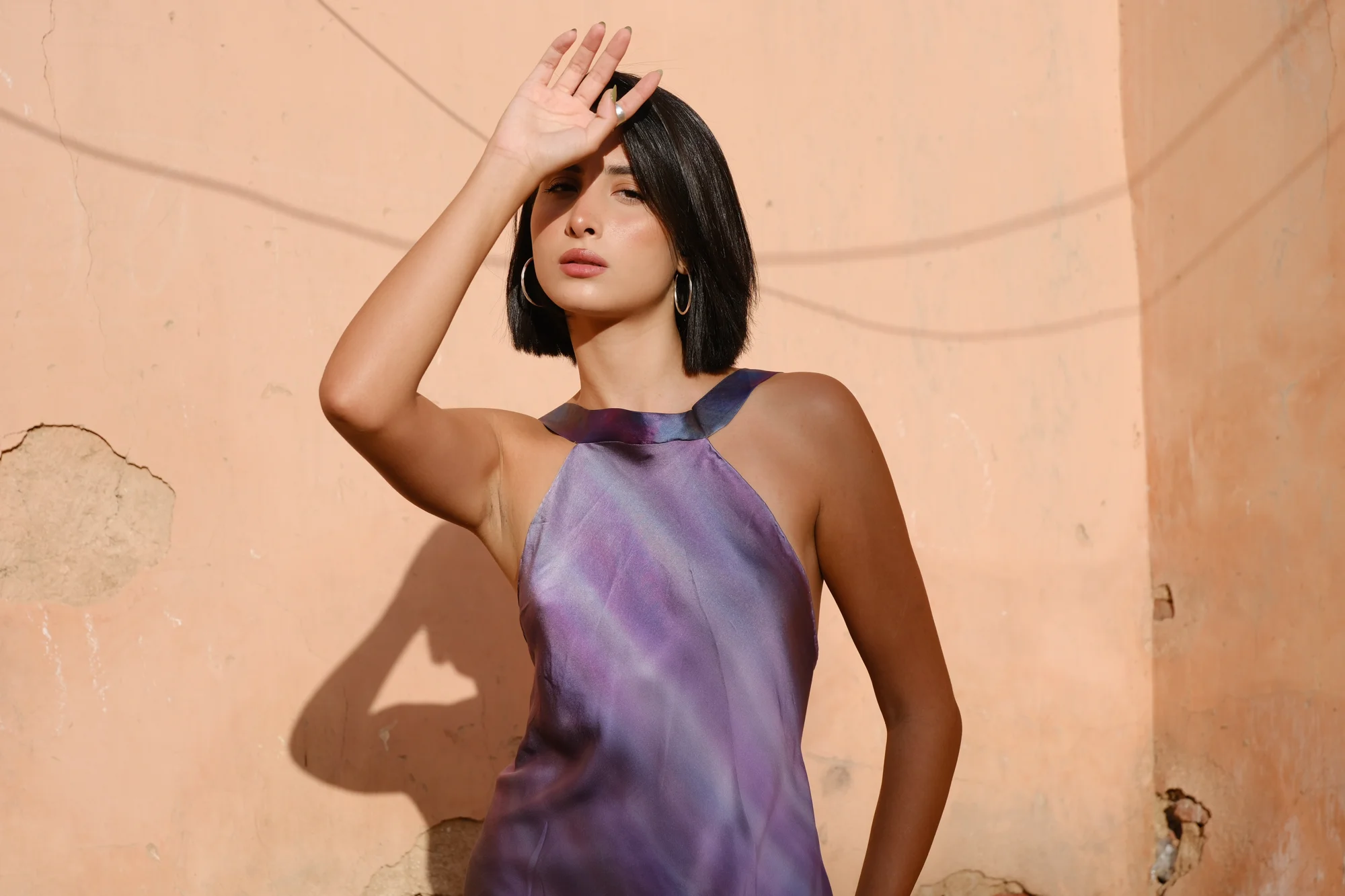
A single square of silk becomes a dress without compromising craftsmanship or creating unnecessary waste. Sophia Marie paints the surface first, then allows the fabric to inform how it drapes and moves on the body. In her collection of zero-waste silk dresses, thoughtful construction celebrates the inherent beauty of the textile, allowing colour, movement, and hand-painted details to take centre stage.
The New York-based textile artist and fashion designer, originally from the San Francisco Bay Area, holds a BFA in Textile Design from the Academy of Art University. Her practice spans painting, natural dyeing, upcycling, and zero-waste construction. Working with 100 per cent silk charmeuse, she approaches each garment as both a work of art and an exercise in intentional design, where craftsmanship, material integrity, and minimal waste define its value.


That philosophy grew from an unwillingness to discard her own work. Watching The True Cost in 2015 shifted her understanding of clothing production and its human and environmental implications. Later, while working with fashion design companies, she witnessed firsthand the amount of fabric discarded in cutting rooms, even during the development of a single sample. These experiences transformed waste from a distant environmental concern into a tangible design challenge.
“Every inch has value, especially when the textile itself is an original artwork,” Sophia says. Hours of painting and experimentation make each textile worth preserving. This raises a central question in her practice: How can a single square of hand-painted silk be transformed into a flattering silhouette while preserving the artwork’s integrity and eliminating fabric waste?

The process begins long before the silk reaches her hands. Mood boards establish who the pieces are for, where they might be worn, and the season they belong to. Visual references inform colour palettes, textures, and motifs. Watercolour studies on paper and digital sketches in Procreate allow her to explore compositions before translating them onto fabric.
Even then, the painting remains open to change. Organic shapes, waterlines, and textures emerge as pigments interact with silk, and Sophia incorporates these unexpected details into the composition. Planning provides direction while leaving room for spontaneity. “The hand-painted process introduces subtle variations, giving each garment its own character while maintaining a cohesive design,” she explains.
Once painted, the silk is washed and treated to set the colours before construction begins. A carefully considered back seam establishes the silhouette, while strap placement and proportion are designed to complement the artwork and enhance the natural drape of the fabric. The result is a refined, versatile garment that balances artistic expression with thoughtful construction.
“I enjoy how this process allows the artwork to guide the construction rather than forcing the textile into a predetermined pattern,” Sophia says. Through draping and refinement on a dress form, she develops silhouettes that can be reproduced across a collection while preserving the individuality of each hand-painted textile.


Each dress takes approximately five to seven hours of hands-on work, from initial colour development through painting, washing, and final construction. Silk charmeuse is chosen for its subtle sheen, fluid drape, and ability to capture rich, expressive colour. The effortless elegance of the finished garment reflects a meticulous process where artistry, material, and construction are equally considered.
Marrakech provides a striking backdrop for this collection. Against terracotta walls, ornate doorways, and the intricate textures of the Medina, the hand-painted designs find a natural connection to the city’s rich visual landscape. Collaborating with local model Jaseumine, Sophia photographed the collection in the early morning light, capturing the interplay between colour, movement, and architecture.


The surroundings contribute colour and texture without the need for elaborate sets. Jaseumine’s confidence and natural movement bring the dresses to life, highlighting their fluidity and drape. For Sophia, fairly compensating a local female creative reflects the same respect for craftsmanship and labour that informs her approach to fashion. The collaboration becomes an extension of the values behind the collection.
“I want to reconnect people with the hands behind the things we consume,” Sophia explains. Seeing handwoven rugs and traditional textiles in the Medina reinforces that intention. She wants contemporary garments to receive a similar appreciation for the patience and skill behind their creation, encouraging people to care for and repair clothing rather than treat it as disposable.

Her education and participation in design competitions have also shaped her creative practice. A semifinalist in the Redress Design Award 2024 and a finalist in the Arts Thread x Gucci competition in 2023, Sophia values the structure and deadlines that push her to test unfamiliar ideas. “I don’t view those experiences through the lens of winning or losing,” she says. Instead, each experience contributes to an evolving practice shaped by curiosity and experimentation.
She is now developing relationships with select New York City retailers while continuing to refine zero-waste patterns and explore new textile manipulation techniques. Alongside silk, she hopes to incorporate more natural fibres, particularly hemp, into future collections. Beyond the runway, Sophia Marie envisions gallery exhibitions that invite viewers to slow down, observe, and engage more deeply with her work as both fashion and art. Much like sustainable fashion itself, the single square of silk represents a starting point for innovation, not a limitation. Its inherent value is preserved and celebrated as it takes on new forms.
Brand: Sophia Marie (@sophiamarie.art)
Designer: Sophia Marie (@sophia.marie)
Model: Jaseumine (Jass)


