
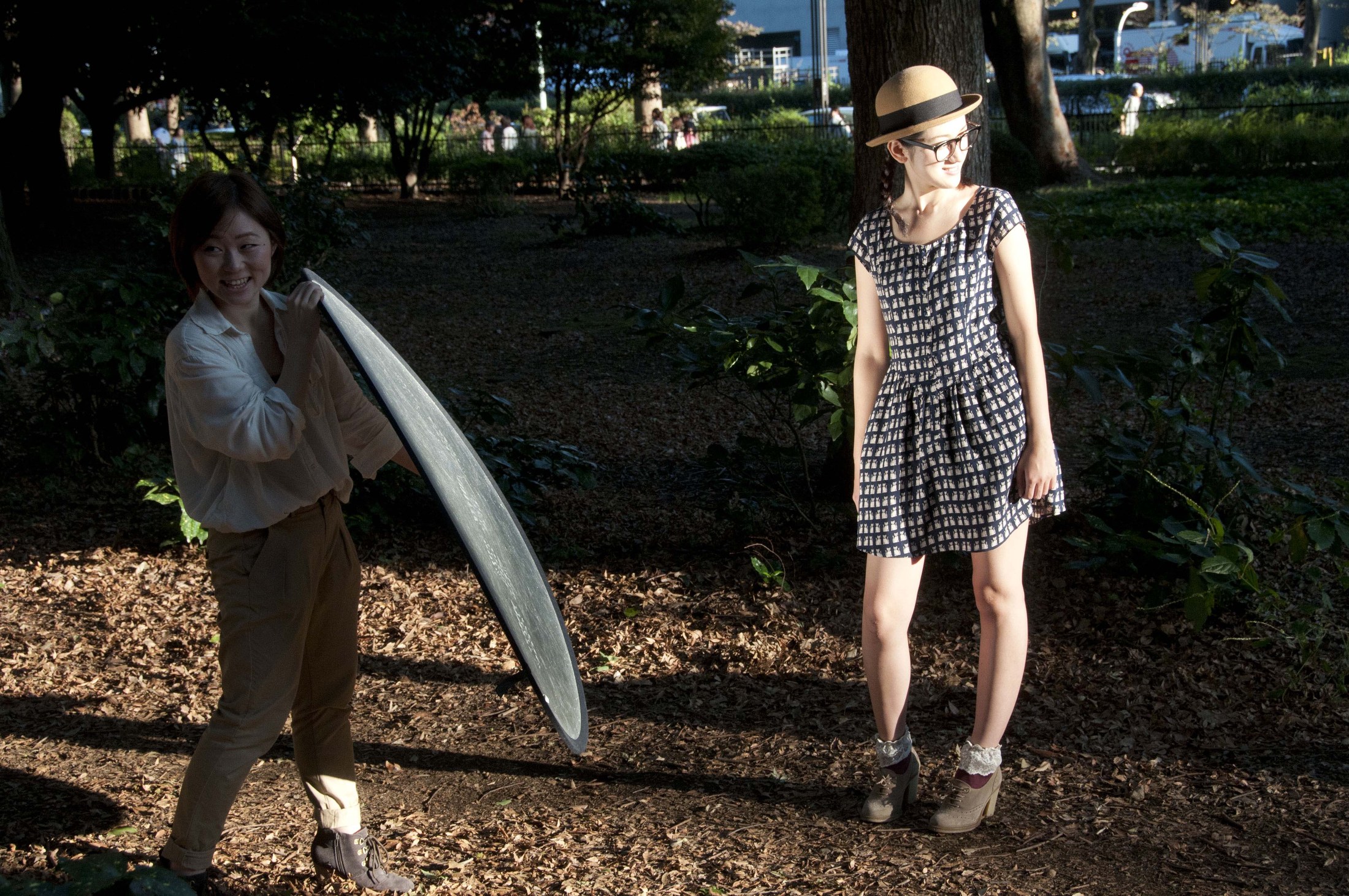
How do you shoot a lookbook when you do not have a studio, a big budget, or a 20-person crew? You plan it like a small production, then keep the pictures themselves simple. Editors and buyers need to see the clothes clearly: the silhouette, the fabric, the proportion. A rented white infinity curve is optional. Daylight, a plain wall, a model who fits the garments, and a tight edit are not.
Decide what the lookbook is for
A lookbook is a set of images that presents a collection as a whole. It is not the same as a campaign, and it is not your social feed. If you are sending work to a magazine, a buyer or a competition, the pictures have a job: show the garment honestly, in a consistent way, so someone who has never seen it can understand it in a few seconds.
Before you book a single person, write a short shot list. For each look, you usually need a full-length image, a three-quarter or front-and-back if the design needs it, and one or two details (a closure, a fabric, a hem). If the collection has a strong idea, one or two wider pictures can set the mood. If those mood shots start to hide the clothes, they belong in a separate campaign, not in the lookbook you send to an editor. Our guide to writing a fashion press release is blunt about this: in fashion, images often decide whether a story runs.
Light, backdrop and a place that costs little
Light is the budget item that matters most. A large window, with the model standing in open shade rather than hard midday sun, will do more for you than a cheap lighting kit used badly. Turn off mixed indoor bulbs if you are using daylight, so the colour of the cloth stays true. Mid-morning or late afternoon is often easier than noon.
For a backdrop, a plain wall, a roll of paper, a sheet pulled tight, or a stretch of even outdoor shade is enough. The wall should be clean, and the floor should not compete with the hem. An empty apartment, a school studio after hours, a friend’s white-walled office at the weekend, or a quiet exterior with no clutter in the background will all work. You do not need to pretend it is a Paris studio. You do need the same background, or a very small number of backgrounds, across the set, so the collection holds together when the images sit in a grid.
If you hire or borrow one thing, make it a roll of seamless paper or a simple reflector (even white board) to lift shadows under the chin and on the fabric. Move the model, not only the camera, until the cloth reads.

The people, the kit, and the paperwork
A lookbook team can be three people: someone to take the pictures, someone to wear the clothes, and someone to steam, pin and keep the shot list moving. Sometimes that third person is you. Friends can model if they fit the garments and can stand still. A dress form is useful for details and for looks that are not yet fitted to a body, but a lookbook made only of mannequin shots will often feel unfinished to a buyer.
A recent camera or a recent phone can both be enough if the light is good and you shoot at the highest quality the device allows. Use a tripod or a steady surface if you can, keep the lens clean, and get the clothes sharp. Do not add heavy filters. You can correct colour later; you cannot invent a detail that was out of focus.
Get written permission. A simple model release, and confirmation that you have the right to use the location, will save you from having to withdraw pictures later. Agree credits in advance for the photographer, model, hair, make-up and anyone else who should be named. Those credits should travel with the files when you send them out, which is also how a press kit should work.
Edit tightly, then send files people can use
Shoot more than you will use, then cut hard. One clear image of a look is better than six almost identical ones. Keep the cropping consistent. Leave a little space around the figure so an editor can crop for a homepage or a social frame without losing the hem or the shoes, if the shoes are part of the design.
Retouch lightly. Remove a thread or a mark that is not part of the garment. Do not reshape the body or the clothes until they are unrecognisable. Buyers and editors have to trust what they are seeing, especially if they may order or feature the work without a fitting.
Export a set of high-resolution files, with simple names (look-01-front, look-01-detail) and a caption document that lists the look, the materials and the credits. Share them through a download link rather than a compressed message thread. The same set can support a stockist pitch, a competition entry and a press email. For the wider launch around those pictures, see How to Start a Fashion Brand in 2027 and How to Get Your Fashion Brand Stocked. If drawing is not how you think, a lookbook is also one of the most direct ways to show the work, which is the point of Can I Be a Fashion Designer If I Can’t Draw?.
A small lookbook that is sharp, consistent and honest will travel further than a chaotic set made in an expensive studio. Spend the money, if you have any, on the person who will steam the clothes and the hour of help that keeps the day on schedule. The backdrop can be a wall.
Keep exploring
Cover: A fashion shoot in Yoyogi Park, Tokyo, with an assistant holding a reflector for a model in daylight. Photo: Bryan Ledgard, via Wikimedia Commons, licensed under CC BY 2.0. Body: A photographer photographing a model in daylight in Ayia Napa, Cyprus. Photo: Janne Räkköläinen, via Wikimedia Commons, licensed under CC BY-SA 2.0.


