
For a small boutique, the risk in buying an imported label used to sit in the usual places: whether the clothes would sell, whether the delivery would arrive on time, and whether the margin would still look healthy after a quiet month. A growing number of shop owners now have another calculation to make. If a duty or brokerage bill lands after the stock is already in the building, the buy that looked reasonable on a line sheet can suddenly cost far more than the shop agreed to pay.
That is why some independent retailers are walking away from imported lines, or agreeing to keep them only if the brand ships delivered duty paid. The pattern is not a rumour from social media. Shop owners have described the bills, and the decisions that followed, in interviews over the past year.
A bill that arrives after the clothes do
Tara Stover, who opened Shoppe Cozette in Birmingham, Michigan, in the summer of 2026, told Vogue that a shipment from the Danish label Skall Studio came with a UPS bill of about $1,700 in duties. The clothes were selling. The economics of reordering them, if every delivery carried a surprise like that, were not. After she raised it, the brand covered the duties on that shipment and moved the account onto delivered-duty-paid terms, so the tariff cost would be settled before the stock reached her door.
That distinction matters more than the jargon suggests. Under delivered duty unpaid terms, the retailer can be left to settle duties, taxes and sometimes brokerage fees when the parcel clears customs. Under delivered duty paid terms, the brand (or its shipper) builds those costs into the price and pays them up front. For a boutique working on tight cash flow, the second arrangement is simply clearer. As Stover put it, a surprise bill after the fact quickly changes the calculation, whereas a duty-paid shipment can be judged on the product, the margin and how well it sells.
When shops stop reordering
Not every story ends with the brand stepping in. Vonnie Sullivan, who owns Village Mercantile in Rye, New York, told the Rye Record that she stopped ordering what had been one of the shop’s most popular items, an Indian robe that retailed for $68. A 50 percent tariff on clothing imported from India, she said, would have pushed the ticket over $100, a price she did not think would sell.
In Columbus, Ohio, Maren Roth of Rowe Boutique told WOSU that costs on some reorders had already risen by about 15 to 20 percent. Some brands were absorbing part of the increase. Others were not. Looking ahead to her next market, she said she might have to “cut back on some of the pieces that we’re bringing in from brands that we love, maybe not bringing those brands in at all.”
These are individual shops, not a census of the sector. But they point in the same direction. When the landed cost is unpredictable, the easiest decision is to buy less from abroad, or to stop buying a line altogether, and to spend the open-to-buy on labels whose costs will not change between the order and the delivery.
The brand on the other side of the invoice
The same bills are hitting the labels those shops buy from. Fairechild, a small rainwear company in Dartmouth, Nova Scotia, paused shipments to the United States in mid-August 2026 after unexpected charges began landing. Founder Tabitha Osler told Modern Retail that the team had added a flat duty estimate in Shopify, then started receiving extra UPS charges, some around 50 percent of the order and some equal to the entire order value. Brokerage and processing fees, she said, were making the total far higher than the duty alone. For a three-person business with annual revenue of around $380,000, absorbing thousands of dollars was not manageable. In a separate interview with Global News, she estimated the chargebacks at “probably $10,000 at least” over two to three months. The company later reopened US shipping with duties and taxes shown at checkout.
Fairechild’s experience is a useful warning for any independent label that sells wholesale or ships direct into another country: a rate you looked up once is not the same as the invoice that arrives. Classification, origin, brokerage and carrier fees can all move the number.
What this means if you want to keep your stockists
If you are pitching boutiques, or trying to keep the ones you already have, duty-paid shipping is no longer a nice extra. It is often the condition on which a shop will place a second order. That means:
- Know the landed cost before you quote a wholesale price. Look up the tariff classification for each product, and get a quote that includes duties, taxes and the carrier’s brokerage fee, not only the duty rate on a government website.
- Be explicit about the terms. Say clearly whether an order is delivered duty paid or whether the retailer is expected to settle charges on arrival. Ambiguity is how relationships end.
- Do not bury a surprise in the first shipment. A first order that arrives with an unexpected bill is a very efficient way to lose the reorder, even if the clothes sell.
- Build the cost into the price you can actually support. If duty-paid terms wipe out your margin, the wholesale price, the production plan or the market itself may need to change. Our guide to pitching boutiques and stockists is of little use if the shop cannot afford to receive the order.
Some labels will decide that a given market is no longer worth it, and concentrate on home sales or on shipping models they can price in advance. Others will keep exporting, but only with terms a boutique can plan around. Our piece on ready-to-ship versus made-to-order looks at a related question: how much stock to commit to before you know it will sell. That kind of planning sits close to merchandise planning, and to the wider choices in How to Start a Fashion Brand in 2027. For labels shipping into the European Union, the new per-item parcel charges are a separate, and more predictable, cost, which we break down in What the New EU Parcel Fees Actually Cost a Small Brand.
None of this makes imported fashion a bad idea. Stover still carries European labels that her customers ask for, and she told Vogue she would think hard before dropping a line that is clearly distinctive. The shops that remain open to imports are not asking brands to make the tariffs disappear. They are asking not to find out the real cost after the boxes have been opened.
Sources: Vogue, Rye Record, WOSU, Modern Retail, Global News.
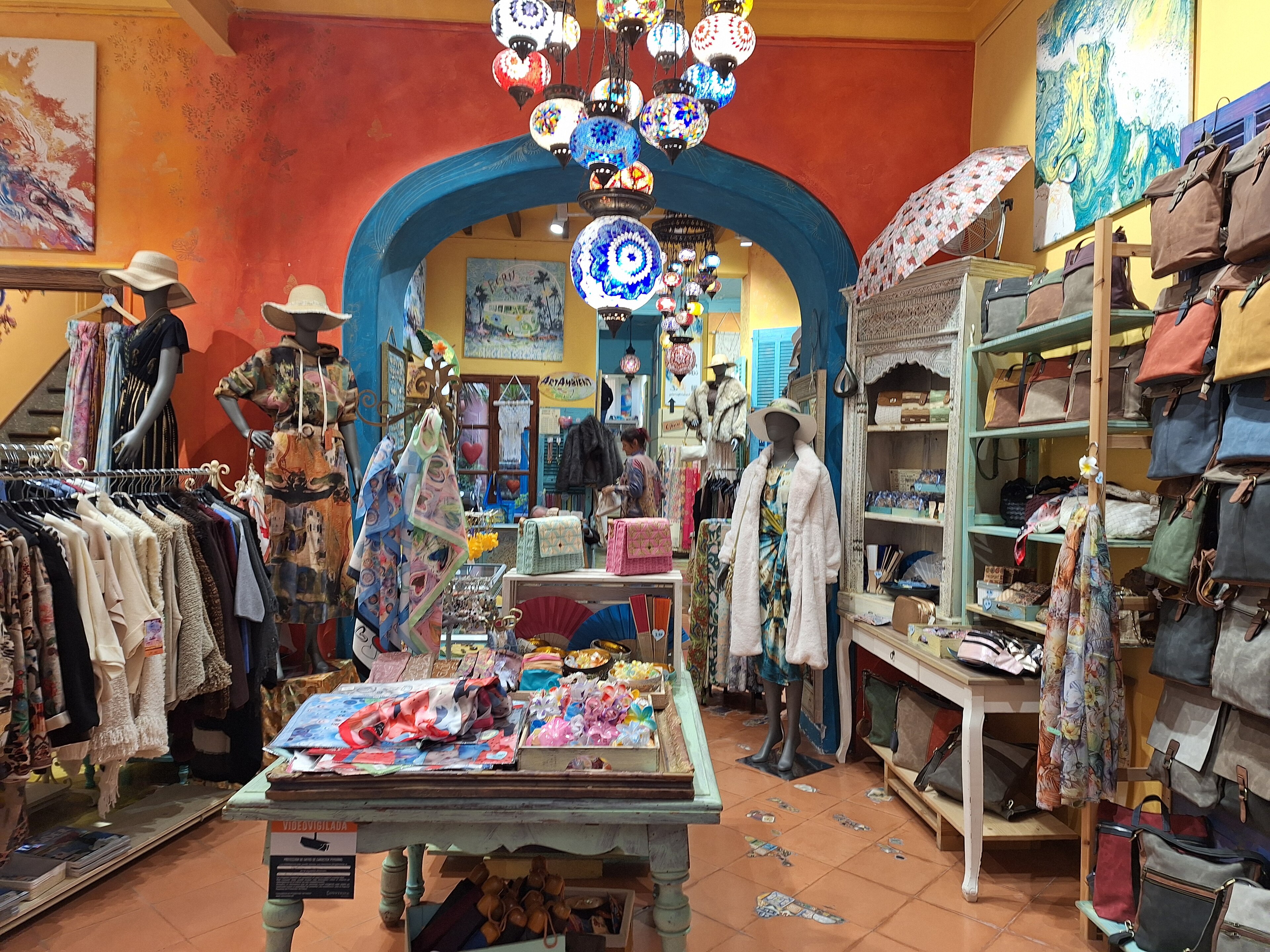
Cover: Interior of the ArtAmbient boutique in Artà, Mallorca. Photo: Steffen Mokosch, Wikimedia Commons, licensed under CC BY-SA 4.0.


